Remote work setup and gear
The gear that travels, how to handle internet and banking before you leave, and the AI tooling that makes a one-person operation work from anywhere.
The whole office fits in a backpack, and that constraint has shaped the setup more than any preference has.
Most remote-work gear content is a shopping list. This is closer to a set of decisions. What's worth carrying, what's worth solving before you fly, and what actually does the work once you land.
Gear
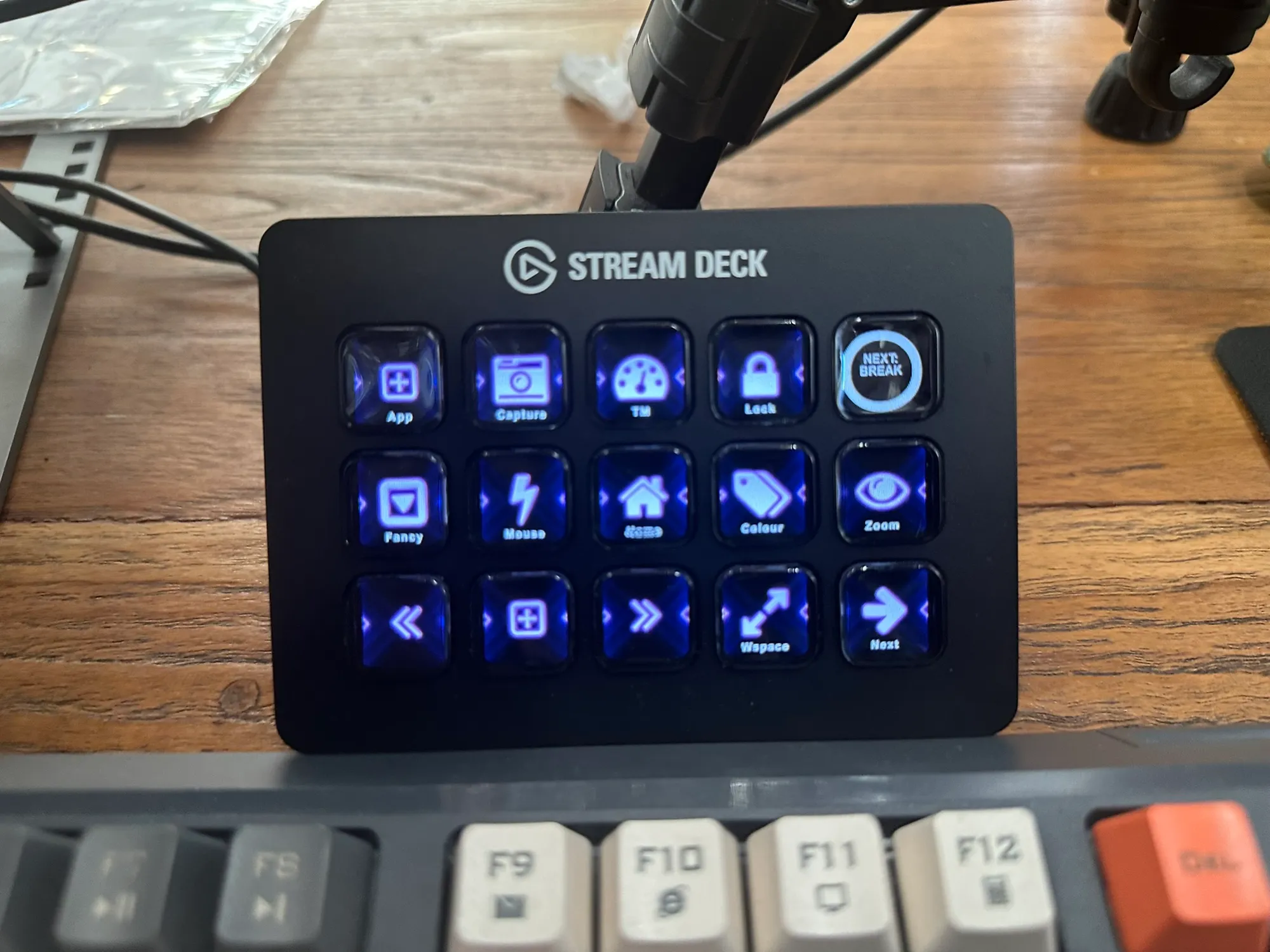
A laptop on a stand, a portable second monitor, a mechanical keyboard and a Stream Deck. That's the whole thing, and it packs into a backpack in about two minutes.
The portable monitor is the single item I'd argue hardest for. Working off one laptop screen is survivable for a week and corrosive over a year. The weight penalty is smaller than almost any other productivity purchase you could make.
Everything else is deliberately absent. Every additional item is something to carry, insure, and replace in a country where you may not be able to replace it.
Internet & connectivity
- SIM
- Local, on arrival — handset must be unlocked
- 2FA
- Migrate off SMS two weeks before departure
- Banking
- Multi-currency account for daily spend
A local SIM on arrival covers data and calls. Sort out an unlocked handset before departure, not at an airport counter. Co-working internet is the reliable option. Apartment internet varies enormously and shouldn't be assumed.
The item most likely to genuinely ruin a week is two-factor authentication tied to a home mobile number. Banking is the critical case. If that number stops being reachable, you can be locked out of your own accounts from eight thousand kilometres away. Migrate everything you can to an app-based authenticator. Start a fortnight before you fly, not the night before.
The full pre-departure checklist
AI tools while travelling
The setup is narrow on purpose. One terminal-based AI agent is the primary work surface, running against a single repository. That repository holds every project, the automation scripts and a markdown knowledge vault. Writing, building, research, deploying and debugging all happen through the same interface.
The reason that matters more when you're mobile than when you're not is that it collapses the number of things that have to work. One machine, one repo, one interface — everything else on a server that stays up whether or not your connection does.
The always-on half runs on a small cloud server — a workflow engine, an agent API, a vector store, and about a dozen other containers. Anything that needs to run on a schedule runs there, reports into one channel, and doesn't care which country I'm in.
How the whole system is wired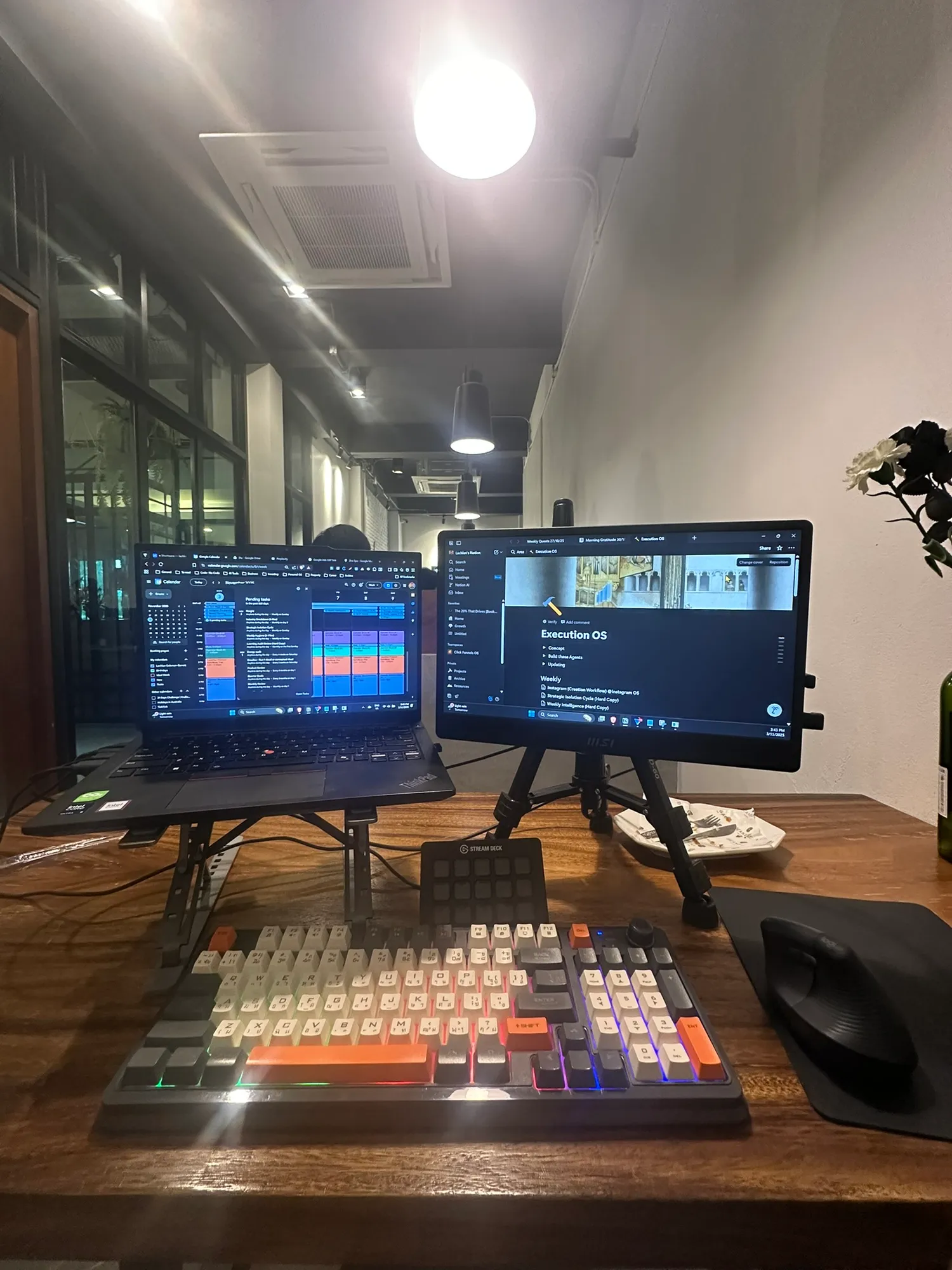
Productivity setups
Most of what I put into the machine is dictated rather than typed. It's unglamorous, and probably the highest throughput-per-dollar decision in the entire stack.
The wider tooling question is worth being ruthless about when you're paying for it from a different currency. The honest test isn't whether a tool is good. It's whether you'd re-buy it today at full price knowing what you know now. More of mine have failed that test than currently pass it.
Everything I pay for, and what I cancelled
Remote work tips
Three that actually matter, in order. Notify your bank before you travel or your card gets blocked on the first foreign transaction. Run daily spend through a multi-currency account rather than a standard debit card. Three to four per cent on every purchase compounds quietly across a year. Carry local cash for the first day — exchanging before you fly consistently beats the airport rate.
Passport validity is the one that gets people at the gate: twelve months beyond travel, enforced strictly, checked at check-in. Keep printed copies of visa approval and accommodation. A phone screen is not always accepted at immigration. Paper solves that problem cleanly.
The travel operating model- First trip, 2024
China
Three weeks in Sichuan in early 2024. What China is actually like for a foreigner who does not speak Mandarin, which apps you need, and why I came back preferring Thailand.
- Base since 2023
Thailand
Thailand as a base rather than a trip. Why I chose it, what staying actually involves, what it costs, and how the rest of the country compares to the city I live in.
- The base
Chiang Mai Life
What it actually costs, where to live, what the burn season does to the year, and how the day runs. From someone based here rather than passing through.
- The hard part
Building a Life Abroad
Making friends, handling loneliness, and building routines that survive a move. The logistics of living abroad are solvable admin — this is the part that actually breaks people.
- Field notes
Dating
Cross-cultural relationships, apps, and social dynamics as a foreigner in Thailand — written with a constraint most writing on this topic ignores.