China as a foreigner — Sichuan, Chengdu and Chongqing
Three weeks in Sichuan in early 2024. What China is actually like for a foreigner who does not speak Mandarin, which apps you need, and why I came back preferring Thailand.
I went to China for the first time in early 2024 and spent most of it in Sichuan. Chengdu, Chongqing, and a small town up in the mountains.
It is the most foreign place I have been. That is meant as a description rather than a complaint. Almost nothing about the day was familiar, and almost nothing was built with someone like me in mind.
What follows is what I actually wrote down at the time, not a version tidied up afterwards.
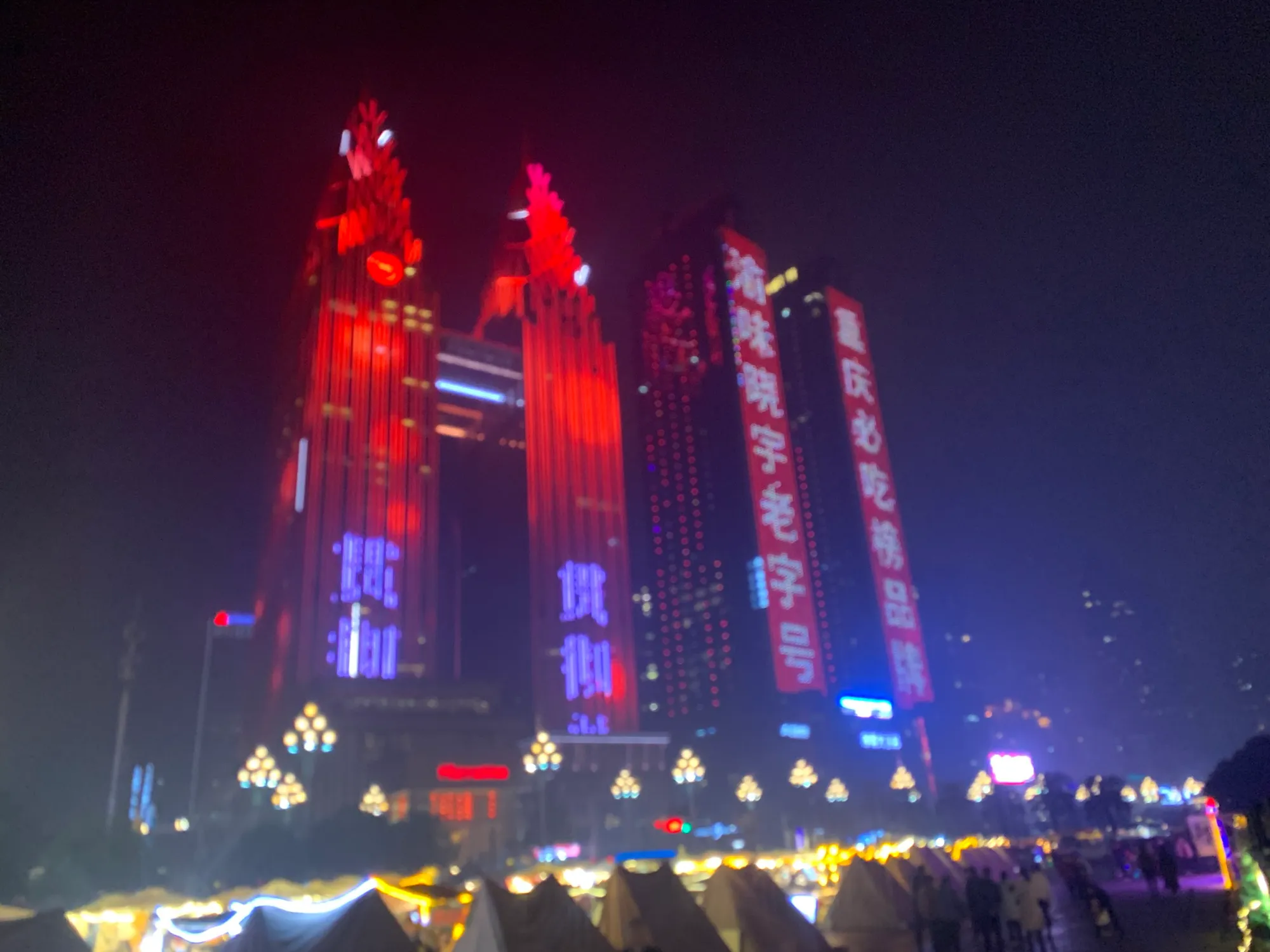
It is not designed for foreigners
- Trip
- Early 2024, around three weeks
- Region
- Sichuan
- Language
- No Mandarin at the time
- Verdict
- Extraordinary to visit, hard to live in
This is the line that turned up in my journal twice in the same fortnight, on separate days, without me noticing I had written it before. China is not designed for foreigners in any way.
It is not hostility. Nobody was unkind to me. It is that the entire stack assumes you are Chinese. The payments, the apps, the maps, the bookings, the signage. Each one has a workaround and the workarounds stack up until the day takes real effort.
The honest version is that I needed help to function. With someone local, the city opened up. Without, it closed. That dependency is the thing most travel writing about China leaves out.
I also spent almost no time around other Westerners, which I liked. It was a very foreign place away from Westerners, and that is rarer than it sounds.
Snow, and a town that lights up
- Night temperature
- About -10C
- Felt
- -6C, hands froze in minutes
- First
- First real snow I had seen
We went up into the mountains. It was the first time I had seen snow like that, and I had not accounted for the cold at all.
It hit about minus ten at night. I was out in around minus six and my hands started to freeze inside a few minutes. Coming from Chiang Mai, where the cool season means a jumper, that was a genuine shock to the body.
The town itself was small and unremarkable in daylight. At night it lit up like a fire pit. That contrast is the image I kept from the whole trip.
Sichuan is beautiful. I still like Pai more, and I think that says more about what I want from a place than about either of them.
Pai, for comparisonTwo cities, two answers
- Chengdu
- Clean, organised, would live there
- Chongqing
- Crowded, would not
- Food
- Sichuan BBQ beats Thai BBQ
Chengdu I liked immediately. Clean, organised, genuinely good infrastructure. I wrote that I could see myself living there, and then in the same breath that China is a bit too hard. Both were true. On the last day I wrote that I would miss the city, and I did.
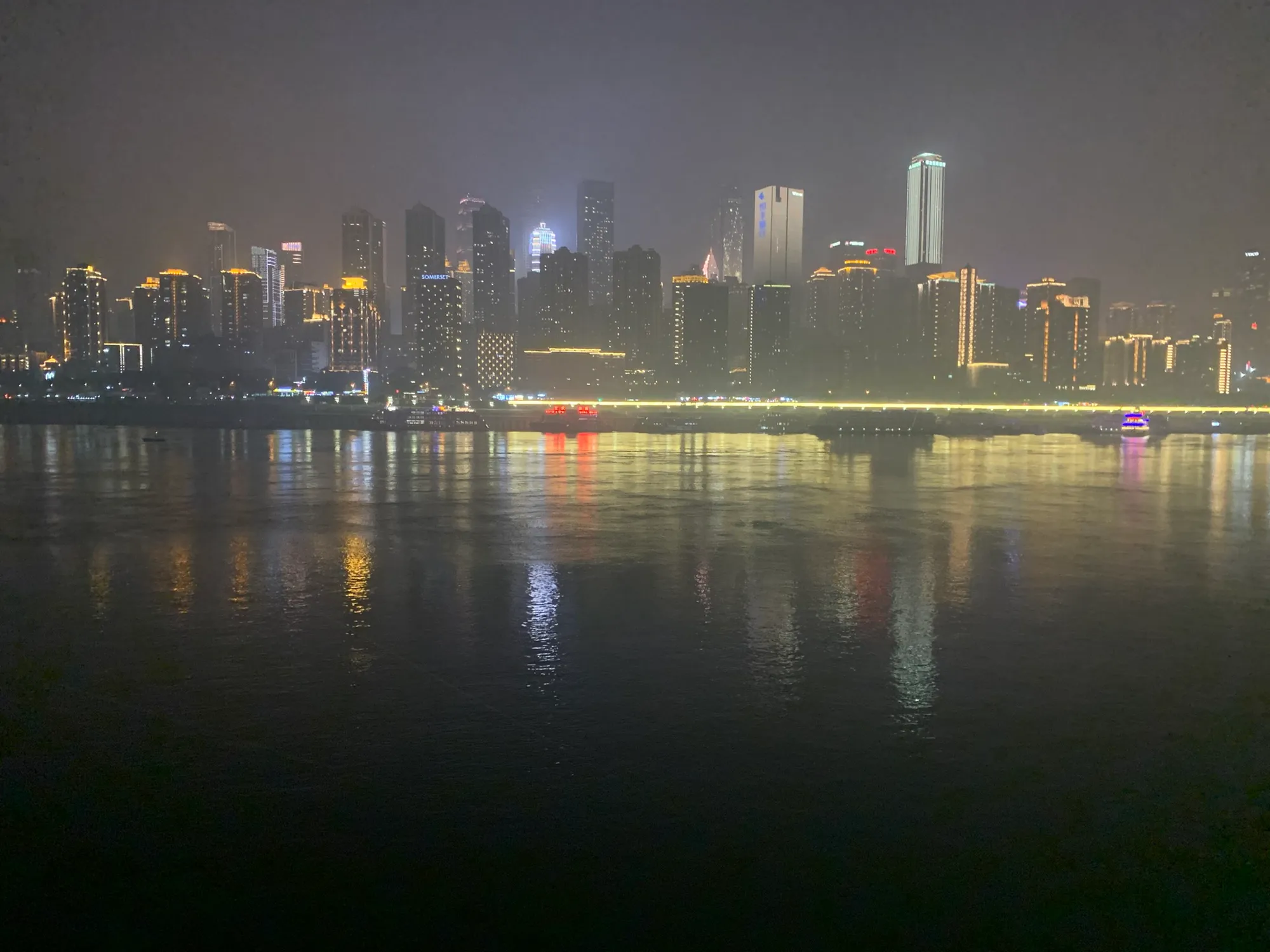
Chongqing did not land the same way. It felt crowded in a way that was more than density, and I could not see myself there.
The food deserves its reputation. Sichuan barbecue went straight onto the list. Better than Thai barbecue. Not as good as Japanese or Korean, which I accept is a controversial ranking.
The thing I actually took home was from a shopping mall. I spent an evening on claw machines and worked out the model. They give you free coins to start. They let you genuinely win on later visits. Then they let you trade a pile of small prizes for one big one, which is where the margin is. I wrote that I would love to set that up somewhere. That is apparently how my brain works on holiday.
The apps you actually need
- Full English
- WeChat · Alipay · Didi · Trip.com
- Partial
- Taobao · JD.com · Bilibili
- No English
- Xiaohongshu · Zhihu · Douban · Gaode
- Maps
- Baidu over Gaode, for the English
- Bring
- Pleco, and a camera translator
China runs on its own app stack and most of it has no English. This is the practical thing I wish I had known before landing, so here it is in full.
These have proper English versions: WeChat, Alipay, Didi for rides, Trip.com for travel, and iQIYI for video. Start here. Between WeChat and Alipay you can pay for almost anything.
These are partial. Taobao has limited English and AliExpress is the international-friendly version of the same thing. JD.com is better in a browser with translation. Bilibili has some subtitled content but the app itself is mostly Chinese.
These have no English at all: Xiaohongshu, Zhihu, Toutiao, Douban, and Gaode Maps. Use Baidu Maps instead, which has some English. For the rest, a browser with built-in translation does more work than any single app.
If you are staying longer than a trip, Pleco and a camera translator stop being conveniences and start being the difference between managing and not.
Getting in, as an Australian
- Visa-free
- 30 days, Australians
- Valid until
- 31 Dec 2026 — recheck after
- Cost
- Nothing
- On arrival
- Online arrival card, police registration in 24h
- From Chiang Mai
- About 4 hours
Australians currently get thirty days visa-free. That started in late 2024 and is extended through to the end of 2026, so anyone reading this later should check whether it still holds.
It costs nothing. No consulate appointment and no invitation letter. You complete an arrival card online, and you register with the local police within twenty-four hours of checking in unless your hotel is an international chain, in which case they do it for you.
Thirty days per entry, and there is no cap on how many times you go. From Chiang Mai it is about four hours in the air, which makes a one-month block genuinely easy to arrange.
Longer stays need a different visa and a real invitation from a China-registered company. That is a separate problem and not one a tourist needs to solve.
Would I go back
Yes, to travel. It is one of the most interesting places I have been and I have seen a fraction of it.
To live, no, and the trip is what settled it. I wrote at the time that China felt almost opposite to me in some ways, and that I much preferred Thailand. Two years on I still agree with that, and I am now clearer about why. The friction is not occasional, it is the baseline, and living somewhere means paying that cost every single day rather than for three weeks.
That is not a verdict on China. It is a verdict on the fit between China and me, in the year I went, without the language. Those are three different variables and at least two of them can change.
The trip earned its place anyway. It is the clearest thing I have to compare Thailand against, and you cannot really know why you chose somewhere until you have properly been somewhere else.
Why Thailand won- Base since 2023
Thailand
Thailand as a base rather than a trip. Why I chose it, what staying actually involves, what it costs, and how the rest of the country compares to the city I live in.
- The base
Chiang Mai Life
What it actually costs, where to live, what the burn season does to the year, and how the day runs. From someone based here rather than passing through.
- The hard part
Building a Life Abroad
Making friends, handling loneliness, and building routines that survive a move. The logistics of living abroad are solvable admin — this is the part that actually breaks people.
- The kit
Tech & Digital Nomad
The gear that travels, how to handle internet and banking before you leave, and the AI tooling that makes a one-person operation work from anywhere.
- Field notes
Dating
Cross-cultural relationships, apps, and social dynamics as a foreigner in Thailand — written with a constraint most writing on this topic ignores.