AI Systems & Workcraft for Entrepreneurs | LachlanCB
The top 250 project

Films, and why I keep count

A quest that started at thirteen: work through the IMDb Top 250 films. Roughly 80% done, and here are the ones that actually changed something.

~80%
of the IMDb Top 250
Age 13
when it started
Oppenheimer
the favourite

Why keep count

You get one life. Story is how you sample the others.

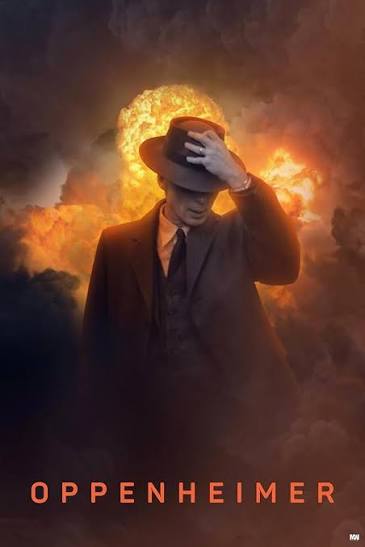
Oppenheimer poster artwork
Oppenheimer — the favourite, and the clearest case for the whole premise.

At around thirteen I set myself the task of working through the IMDb Top 250 films. It wasn't a completionist urge, or not only that. I was thirteen and looking for purpose — and more specifically for identities to try on, and for some sense of what a life could be shaped like. Film was the cheapest available way to do both.

The reasoning has held up better than most things I believed at thirteen. There is a hard ceiling on how much any person can personally live through. You get one childhood, one country to be from, one set of circumstances, and a finite number of years in which to have experiences at all. Almost everything that could happen to a human being will not happen to you.

Story is the highest-bandwidth workaround anyone has invented for that. Not information about an experience — the experience itself, compressed, with the emotional weight left in. It's the closest you can get to acquiring the values and beliefs that normally require having been there, and it costs you two hours instead of a decade.

I want to be careful not to overclaim it. It isn't a substitute for living. Someone who has only watched is still someone who has only watched. What it does is let you sample far more of human experience than one life allows, and arrive at your own experiences having already thought about them once — which is the difference between meeting a situation cold and recognising it.

The reason it's the top 250 rather than whatever's on next is that a canon is a filter someone else already ran. Thousands of hours of other people's judgment, applied so that you don't have to sample randomly. You can argue with any individual entry — I do — but as a filter for a limited life it beats anything I could build myself.

The ones that rearranged something · 06
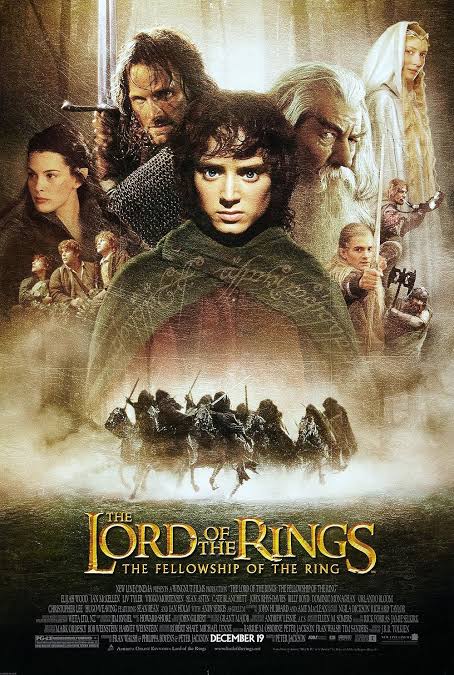
The Lord of the Rings poster artwork
01

The Lord of the Rings

Peter Jackson · 2001–2003

Before the project even started

The first one, and it predates the whole exercise. I watched these as they came out, young enough that they didn't land as films so much as as a place. Medieval worlds, swords, scale, weather, distance — the entire architecture of my imagination got built here and never really got rebuilt.

What they actually gave me was permission to leave. Not literally — the ability to imagine being somewhere that wasn't my own reality, and to take that seriously enough to go and live in it. I spent an enormous amount of my childhood in the backyard because of these films, finding a stick that was the right length and fighting battles that were entirely real to me at the time.

That sounds like a small thing and I don't think it is. The habit of constructing a world and then inhabiting it fully is the same muscle I've used for everything since — imagining a business that doesn't exist yet, or a life in a country I hadn't been to. I learned it holding a stick in a garden in Australia.

I don't think I could evaluate the films fairly now if I tried. They're load-bearing rather than favourite, which is a different category.

I learned to build worlds and live in them holding a stick in a garden in Australia.
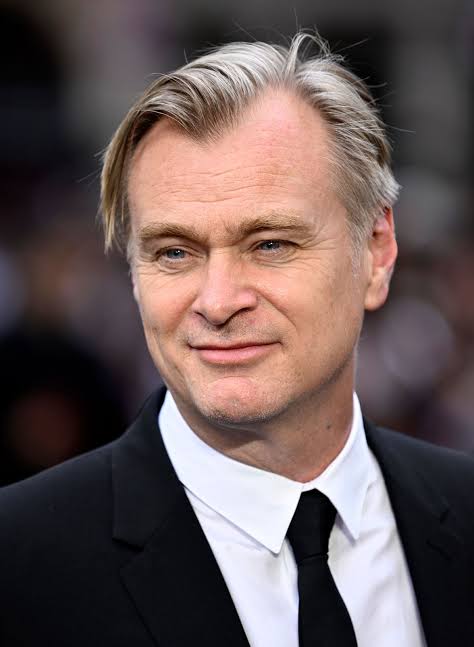
Christopher Nolan
02

Christopher Nolan

The body of work

Teens onward

The director whose films have had the most substantial effect on me, plural rather than singular — several of them sit in the 250 and I'd defend all of them. What Nolan does that almost nobody else does is treat structure itself as the subject. Time, memory, information, the gap between what a character knows and what you know: those aren't devices in his films, they're the actual material.

The effect wasn't only on my imagination. It changed how I read reality — how much of what I take as continuous is reconstruction, how unreliable sequence is, how much of a situation is defined by what's being withheld. That's a strange thing for popcorn cinema to have done, and it did it anyway.

Oppenheimer is my favourite film of all time. Three hours of people talking in rooms about a decision, cut so that dread accumulates rather than arrives, and it lands harder than any spectacle I've watched. It's the clearest case I have for the whole premise of this page — I came out of it holding a moral problem I had never had to hold before.

It changed how I read reality, not just what I imagined.

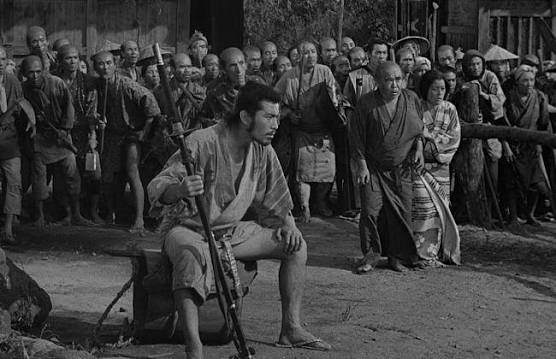
Still from Seven Samurai
03

Seven Samurai

Akira Kurosawa · 1954

The Japanese cinema period

I went through a stretch of working specifically through Japanese filmography, and Kurosawa was the centre of it. Seven Samurai is the one that stuck — three and a half hours that never feels it, and a film so structurally influential you've already seen its skeleton a dozen times without knowing where it came from.

What holds up is how unsentimental it is about the people it admires. The victory is real and the cost is stated plainly at the end, with no attempt to make you feel better about the arithmetic. I think that's the first time I registered that a story could refuse to comfort you and be stronger for it.

The first time I registered that a story could refuse to comfort you.

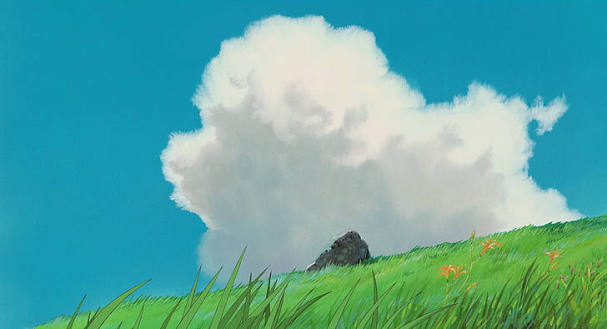
Still from Spirited Away
04

Spirited Away

Hayao Miyazaki · Studio Ghibli · 2001

Childhood, and everything after

  • Princess Mononoke
  • My Neighbour Totoro
  • Howl's Moving Castle

This is the one closest to my heart, and it's the film where I first fell in love with art as a thing in itself rather than as entertainment. Not the story — the images. I remember being visually struck in a way I had no vocabulary for at the time.

The whole Ghibli catalogue is in that category for me. What Miyazaki does is refuse the usual moral shape: there's rarely a villain, the world is indifferent rather than hostile, and beauty and menace occupy the same frame without either cancelling the other. As a kid I couldn't articulate why that felt truer than what I was used to. As an adult it's obvious.

The first time I fell in love with art rather than with a story.

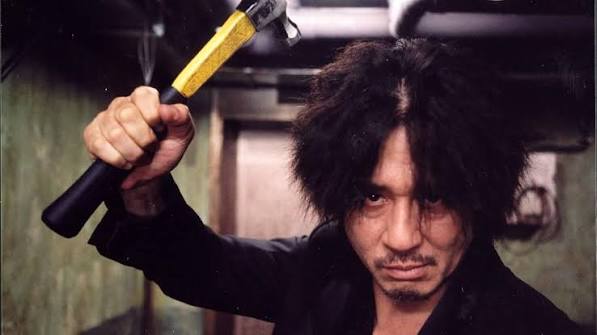
Still from Oldboy (2003)
05

Oldboy

Park Chan-wook · 2003

The one that did damage

The film that blew my mind the furthest and did the most damage doing it. I came out of it genuinely unwell for a few days, which at the time I didn't know a film could do to a person.

It works because it spends two hours letting you want something and then makes wanting it the horror. There's no version of watching it a second time that recovers the first, and I've never wanted to try.

To be unambiguous: the 2003 Korean original. The remake is worthless and I'd rather nobody's first encounter with this was through it.

I didn't know a film could do that to a person.

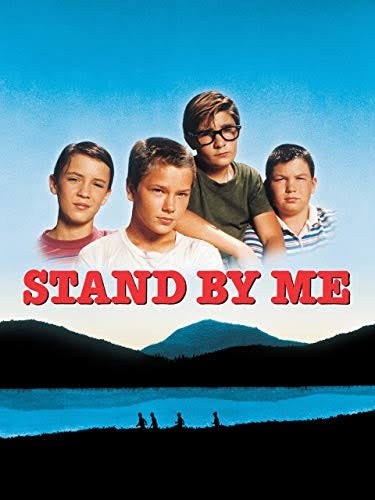
Stand By Me poster artwork
06

Stand By Me

Rob Reiner · 1986

The self-development years

This one landed during the period I was first taking self-development seriously, which is probably why it hit as hard as it did. It's a small film about four boys walking somewhere, and underneath that it's about the specific moment you realise the people you're closest to are not going to be the people you end up with.

It shaped how I think about friendship having seasons rather than being permanent — an idea I've since applied far more widely than it was meant to be, including to how I think about interests and about moving countries.

Friendship has seasons. I got that from this before I could have got it from experience.

Television

Now its own page — the shows that stuck, and the five-year rule I use to avoid re-watching anything.

The television page →
Books

Now its own page — seventeen books that shifted something, rated, plus an argument about why the way we acquire knowledge has changed more in three years than in the previous three hundred.

The books page →