Living in Chiang Mai
What it actually costs, where to live, what the burn season does to the year, and how the day runs. From someone based here rather than passing through.
Chiang Mai is my primary base and has been since 2023. It's a city people arrive in for three months and leave in three years. Almost everything written about it comes from someone in their first ninety days.
This is the version from further in. The real cost structure, the seasonal problem nobody mentions in the brochure, and the parts that are genuinely worse than home.

Cost of living
- Rent
- A$300–400/mo · ~US$195–260
- Food
- A$250–450/mo · ~US$165–295
- Transport
- A$120/mo · ~US$78 bike hire
- Fixed annual
- ~A$4,600 · ~US$3,000
- Loaded monthly
- A$1,000–1,200 · ~US$650–780
All figures on this page are Australian dollars, because that is what I earn in. US dollar conversions are shown alongside at around 0.65. The rate will drift. The AUD figures are the accurate half.
The honest headline is around A$1,000 a month in recurring costs, landing between A$1,000 and A$1,200 fully loaded. Rent for a furnished studio with air conditioning runs A$300–400. Food runs A$250–450, depending on how much comes from markets versus restaurants. Gym, subscriptions and incidentals add another A$150–200.
The number everyone quotes is the monthly one. It's the least useful. The fixed annual costs sit outside it. A twelve-month visa arrangement, two return flights, and health insurance come to roughly A$4,600 (about US$3,000). That comes before the monthly figure starts counting at all. Budget on rent and food alone and you'll be badly out in year one.
Set against an Australian capital, the whole structure runs about 60 to 70 per cent cheaper. That gap is the entire model. It does not work on a low income. It works on a moderate income with dramatically lower expenses. That is a much less romantic claim than the one usually made.
The full cost architecture
Apartments & accommodation
The criteria that matter, in order: air conditioning, quiet, clean, laundry access, and position relative to wherever you actually work and train. Everything else is negotiable. The target is under about US$250 a month. A furnished studio with utilities often included hits that comfortably.
Accommodation is the single biggest controllable variable and the place the arbitrage usually gets lost. The step from decent-and-affordable to premium-serviced roughly doubles the cost. The liveability improvement is marginal and almost never earns that back. If your Chiang Mai budget has quietly become a Melbourne budget, this is the line that did it.
Past three months, negotiate directly with the landlord rather than booking through a platform. The monthly rate available in person is not the rate shown online.
How I pick a base
Weather & seasons
- Burn season
- ~Feb–May, worst Mar–Apr
- Good months
- June onward
- Indoor
- HEPA H13+, bedroom and workspace
- Window rule
- Closed above AQI 100
The year here has a hard shape and it isn't set by the rain. From roughly February to May, agricultural burning across the surrounding valley and highlands pushes particulate levels into genuinely hazardous territory. March and April are the worst of it. That is the single most important fact about living in Chiang Mai. It is also the most under-reported.
It's not a nuisance to manage with a good attitude — it's chronic particulate exposure, and handling it takes infrastructure. Run a HEPA H13 purifier in the bedroom and workspace. Keep windows closed above an AQI of 100, opened only around dawn. Replace filters on a season schedule, not annually.
The rest of the year is the reason people stay. From June onward the air is good. The rainy season is far less disruptive than it sounds, and the cool season is genuinely excellent. The practical answer to burn season is to leave. Malaysia, Vietnam and Taiwan all have good windows precisely when Chiang Mai has its worst one.
The air quality protocol
Food & cafés
Eating out constantly because it's cheap is the habit that quietly moves your food budget from the bottom of the range to the top. Markets and street food keep it low. Mid-range restaurants don't.
The unpopular observation, having come from Australia: the baseline quality of ingredients is lower. Thailand is cheaper overall, but that gap narrows sharply where you'd least expect. Dairy costs roughly the same. Meat is arguably dearer. You're paying less for some things, not everything.
Thai food also carries its own health cost that gets skipped in the food-paradise version of this story. The cooking oils are the main culprit. None of which stops it being one of the best food cities I've lived in. The trade is real and worth naming.
What I miss about Australian food
Day-to-day lifestyle
A co-working space is the default base rather than the apartment. It solves the working problem and about half of the social one at the same time. The day is built around a protected late-morning-to-mid-afternoon block. That's when I actually think clearly, with admin either side.
The other half is physical and non-negotiable: gym, Muay Thai two or three times a week, yoga once or twice, and sauna and cold plunge. In a city where the working day can expand to fill everything, a training schedule gives the day edges.
How the day is actually structured
Local culture & customs
The section I'm least qualified to write, and I'd rather say so than perform expertise I don't have. Three years in, my Thai is functional and not much more. The honest read is that I've under-invested in integration relative to how long I've been here.
What I will say: the expat-visible layer of this city and the city itself are not the same place. The gap between them is mostly language. Fortnightly Thai–expat language exchange is the current attempt at closing it. This section will grow as I earn the right to write it.
- First trip, 2024
China
Three weeks in Sichuan in early 2024. What China is actually like for a foreigner who does not speak Mandarin, which apps you need, and why I came back preferring Thailand.
- Base since 2023
Thailand
Thailand as a base rather than a trip. Why I chose it, what staying actually involves, what it costs, and how the rest of the country compares to the city I live in.
- The hard part
Building a Life Abroad
Making friends, handling loneliness, and building routines that survive a move. The logistics of living abroad are solvable admin — this is the part that actually breaks people.
- The kit
Tech & Digital Nomad
The gear that travels, how to handle internet and banking before you leave, and the AI tooling that makes a one-person operation work from anywhere.
- Field notes
Dating
Cross-cultural relationships, apps, and social dynamics as a foreigner in Thailand — written with a constraint most writing on this topic ignores.
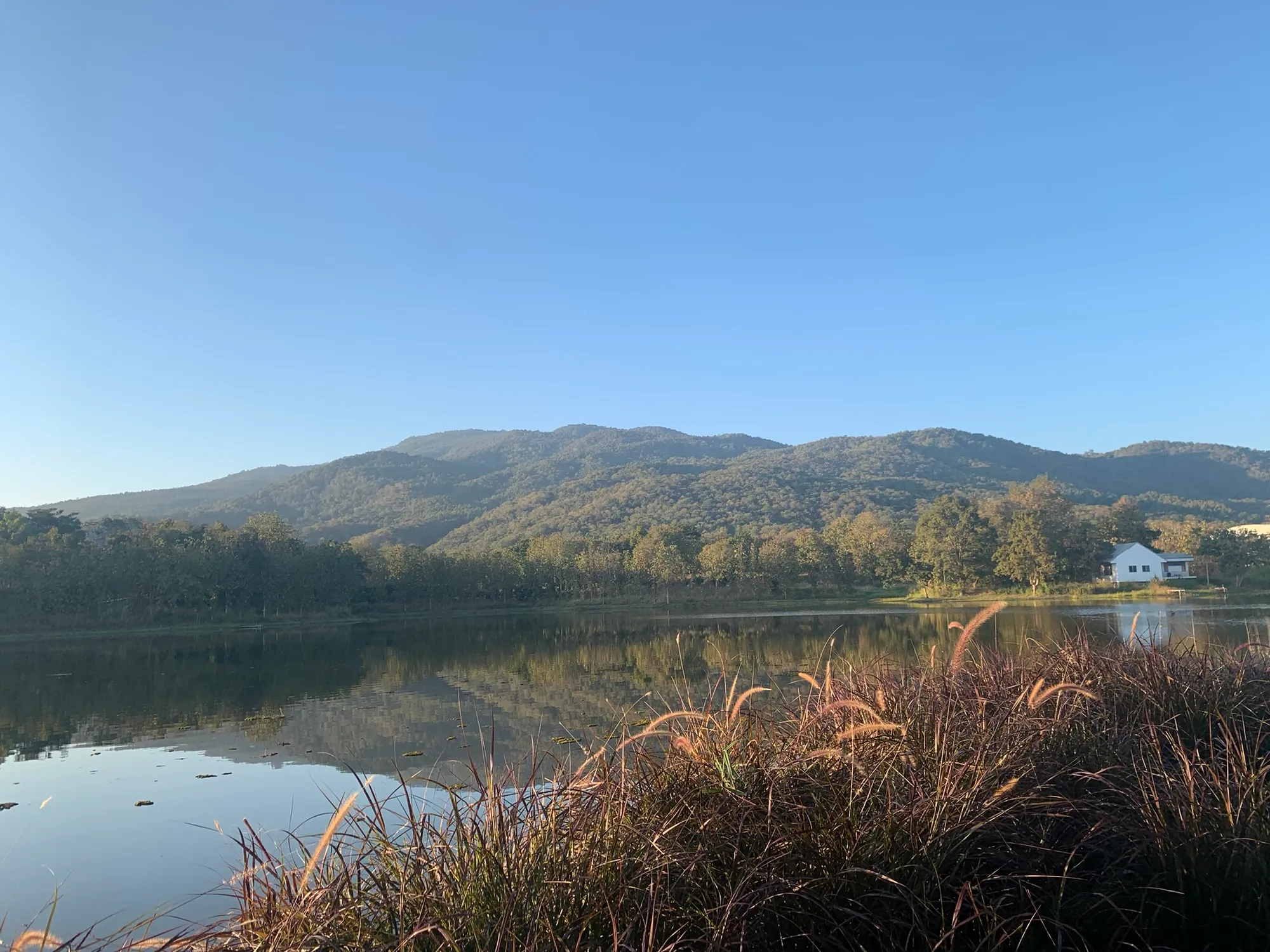
- Is the air better up the mountain in Chiang Mai?Chiang Mai sits in a bowl and the smoke gets trapped under a lid. What PM2.5 actually does as you climb, with real numbers from a bad day.
- Why is appearance such a big deal in Southeast Asia?How you look works as social capital here, not just personal taste. What drives it, what it costs, and why the West has no standing to judge it.
- What time do people get up in Thailand?Thailand wakes between 6am and 8am, later than Australia. The gap that matters in Chiang Mai is between when the city starts and when the cafés do.