Influences
Eight public figures whose work changed how I operate, in the order I found them — from an early-teens obsession in 2008 to a coach I met in 2024. Each entry names the specific thing that changed, not why the person is impressive.
The bar is deliberately narrow. Can I name a decision or a behaviour this person changed? Plenty of people I admire didn't make the page, because admiration and influence are not the same thing, and a list of people I rate would tell you nothing about me.
This is the person, not the work. Books I've rated live on the reading page, and the models I actually run live in the OS. The same name can appear in all three — they answer different questions, and an entry here never turns into a book summary.
The first one
Early teens. Long before any of it was useful, and it still set the shape.
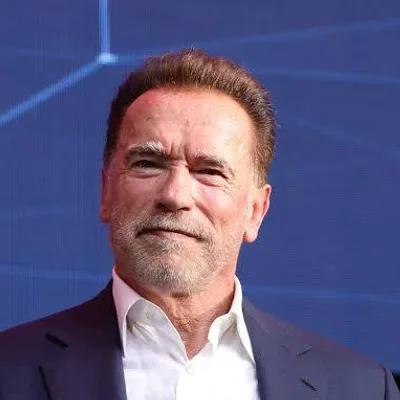
Arnold Schwarzenegger
Bodybuilder, then actor, then Governor of California
Found 2008He's why I never accepted the idea that you pick one thing and stay in it.
He was the Terminator first. That's the only way I knew him as an early teenager, and it took a while to work out that the action star was the third career, not the first.
What actually landed was the overlap. Bodybuilding, cinema and politics weren't a tidy sequence where one finished and the next began — and the bodybuilding itself ran alongside a construction job at twelve hours a day, with two gym sessions on top. That combination is the standard I still measure a full week against. Whenever the sensible advice has been to narrow down to one business and do only that, the answer has been no, and this is where that came from.
The other half is less obvious and probably mattered more. A large part of his rise looks like networking — a genuine ability to make friends, in rooms that were useful. Not a talent you're born with and not a substitute for the work, but a skill, practised. Reading it that way in my teens is why I've never treated the relationship side of a business as separate from the business.
The gaming years
Two people I watched for hundreds of hours without once thinking of it as learning anything. Both turned out to have taught me something structural. The second one arrived the same year everything else changed.
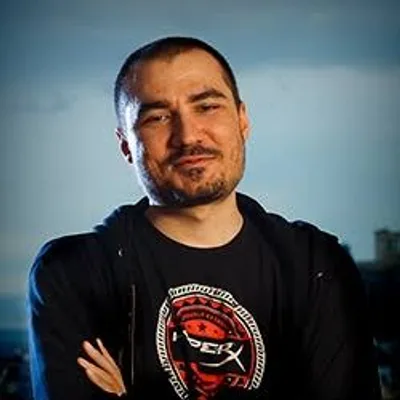
Octavian “Kripparrian” Morosan
Hearthstone and Diablo streamer, and one of Twitch's longest-running personalities
Found 2013He's where I learned that people follow a person, not a subject — I just didn't know that's what I was watching at the time.
Around the time I was finishing school, I watched an enormous amount of his Hearthstone. On paper the draw was the card game. It wasn't. I'd have watched him play almost anything, and the proof is that plenty of his audience did exactly that as he moved between games.
It was the energy and the charisma, and the fact that it was genuinely relaxing to sit and watch someone competent do a thing well. That sounds like nothing. It's the entire premise of building an audience around yourself rather than around a topic, which is the thing I'm doing now — and the first place I ever saw it work was a card game I stopped playing years ago.
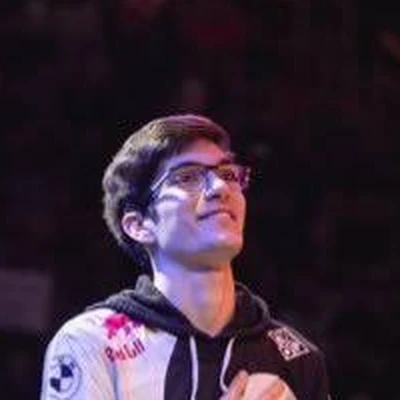
Mariano “SquishyMuffinz” Arruda
Canadian Rocket League professional, among the best of his generation
Found 2018He's my reference for the idea that being able to explain something simply is the actual evidence you've mastered it.
Same category as Kripparrian on the surface — a gamer I watched because I liked his personality and his energy. What separates him is how he talks about what he's doing. He explains genuinely difficult mechanics in a way that is simple without being shallow, and it lands every time.
That's the tell. Vague explanation usually means partial understanding dressed up. Simple explanation from someone operating at the top of their field is the real signal, and I now use it to judge whether anyone teaching anything actually knows it.
The other half is longevity. Staying genuinely competitive at the top of an esport for as many years as he has is a harder problem than getting there — and it's the same problem as staying relevant in any field that moves quickly.
The turn toward business
Twenty-two, and the year the direction of everything changed. Two of the three biggest influences land inside twelve months of each other.
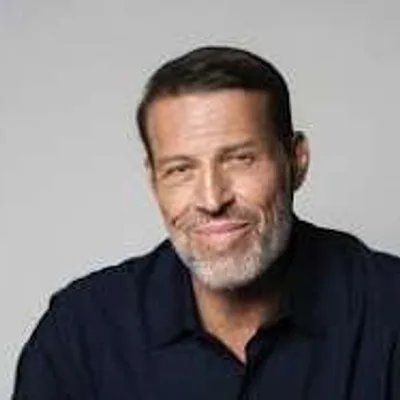
Tony Robbins
Peak-performance coach and author
Found 2018He changed how I invest and what I invest in — and he's the reason I went looking for business at all.
Twenty-two, and the most pivotal stretch I've had. Everything that came afterwards — the e-commerce attempt, the agency, all of it — starts from this point, and Robbins is what pushed me into it.
It began with Awaken the Giant Within and moved into his finance work, which is the part that actually stuck. Not motivation: allocation. What deserves capital, in what order, and why the sequence matters more than the percentages. I still run that logic.
He's also become one of the best-executed personal brands there is, which is worth studying separately from the material. Very few people have held that position for that long.
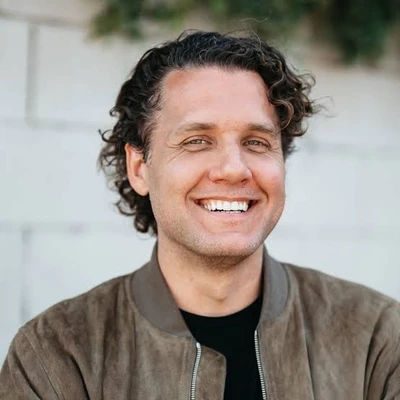
Mark Manson
Writer on self-honesty, relationships and confidence
Found 2018He's why I stopped treating vulnerability as something to hide and started treating it as the thing that makes conversation work.
Same year as Robbins, opposite half of the problem. Robbins pointed at what to build; Manson pointed at who was doing the building.
The concrete change was in how I talk to people. Confidence, approaching strangers, saying the unflattering thing rather than the smooth one — it started as a dating problem and turned out to be a general one. It's the same skill that makes a sales call work, which took me years to notice.
The writing is the reason it landed rather than bounced. He argues rather than asserts, and the idea underneath the sentence is always doing more work than the sentence.
The operator years
Running things rather than reading about running things. The influences get more specific and harder to impress.
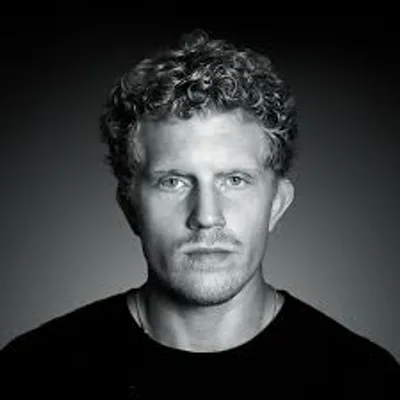
Dan Koe
Writer on creative entrepreneurship and building outside the system
Found 2023He's the reason I stopped assuming the default path was the only one that paid.
Found him in 2023, through the writing rather than the courses or the videos. The idea that hooked me was leaving the system — not as a slogan, but as a workable position, with an argument attached about why one person with distribution doesn't need the structure everyone assumes they need.
Before AI, his writing was the best of it, and that's what he was known for. Plainly. He's probably the last writer who genuinely held my attention on the page rather than as content — which, given how much I read now, says more about him than it does about me.
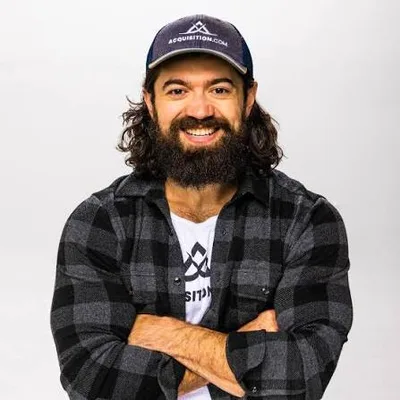
Alex Hormozi
Business, offers and the mechanics of value
Found 2023He rewired how I read value — what a thing is worth, why someone perceives it that way, and why those are two different problems.
The OG of the business material, and probably the single biggest influence on the list. Value, perception, wealth, business, health — he understands the machinery better than anyone I've read, and he explains it without the theatre most of that world runs on.
He'll be a billionaire soon and he's close already, which is worth saying because it's the part that makes the advice checkable. The people teaching business mostly aren't in business. He is.
If there's a single thing that survives into how I work: an offer isn't a price, and the perception of value is a thing you build deliberately rather than something you hope the market grants you.

Kru Bank
Coach, with a substantial public following
Found 2024He's the most recent one, and the only influence who could point at me specifically rather than at people in general.
Everyone else on this page taught me through work made for an audience. He's the exception — someone I actually know, who also happens to have a real public brand, and who coached me directly.
That's the difference and it's a big one. A book can only address the general case. A coach who knows you can name the specific thing you're avoiding, which is both more useful and considerably less comfortable. It changed how I think and, more than that, how I read what I'm feeling before I act on it.
His own background and how he got here is half the value. He agreed to appear here, which I appreciated — and it's characteristic, because coaching is the thing he actually loves doing.