Health
This is the biggest area in my system, and it isn't a training log. It's a set of protocols run on a decades-long horizon. The assumption is that health compounds the same way anything else does, and that the compounding starts now rather than at fifty.
Health here is a set of standing protocols. They run on a decades-long horizon, not a programme with an end date. Thirteen of them: cold and heat, breathwork, mobility, calisthenics, grip, chronotype, sleep, fasting, supplements, cognitive resilience and air quality.
Everything here is the protocol, never the results. How I approach sleep is a system anyone can copy. My actual bloodwork is a medical record and it stays private, along with a good deal else in this area. What's published is hand-picked.

Cold
Not a wellness ritual. It's autonomic training. The goal is control under stress. The highest-return version isn't the one that looks hardest.
- Frequency
- 2–4× per week — more has diminishing returns
- Immersion
- 1–3 minutes, chest level, arms out
- Head dunks
- 5 × 1–2 seconds, exhaling slightly under water
- Cycling
- 3–5 rounds of 20–30s in, 10–20s out
- Timing
- Morning or midday. Not straight after hypertrophy training
Most people train cold one way: get in, stay in, endure. That trains metabolic adaptation and almost nothing else, and it's the layer with the slowest returns. Three separate adaptations are available: cold-shock control, metabolic/brown-fat activation, and autonomic control. A long static soak only really touches the middle one.
The single highest-leverage thing I found is the head dunk. One to two seconds of face-first cold hits the trigeminal nerve zone and triggers the mammalian dive reflex. Heart rate drops immediately. Sympathetic output collapses. Parasympathetic tone surges. An ice bath cools the body and shifts you slowly. A dunk interrupts you. It's the strongest on-demand stress reset I've found, and it takes two seconds.
Longer isn't better. The hormetic spike happens in the first one to five seconds. Past that, risk rises faster than benefit. Same story with the bath itself. Beyond about fifteen minutes there's no extra adaptation, only recovery debt.
I run chest-level immersion with arms out, which sounds like cheating and isn't. Hands and forearms are the most cold-sensitive tissue you have, so they numb first and take fine motor control with them. Keeping them functional means you stay calmer, hold longer, and exit safely. Arms go in for a short finisher at the end, if at all.
The pool version adds a second axis. At around 15°C I'll do one to three minutes to start, working up toward five to ten. Box breathing at 4-4-4-4 the whole time. Alongside it I train static apnea. Face down with support, twenty to thirty second holds building toward one to two minutes. Never without someone else present. That last clause isn't a disclaimer. It's the actual rule: shallow water blackout gives no warning and the people it kills are overwhelmingly experienced. Three rounds of cyclical breathing before entry makes the cold entry itself almost uneventful.
The rule I keep coming back to: adaptation isn't suffering. Going colder and staying longer is ego training. The gains now come from precision, not from making it worse.
"I can stay calm while my body screams." That transfers directly to business stress. It's the actual reason I do it.
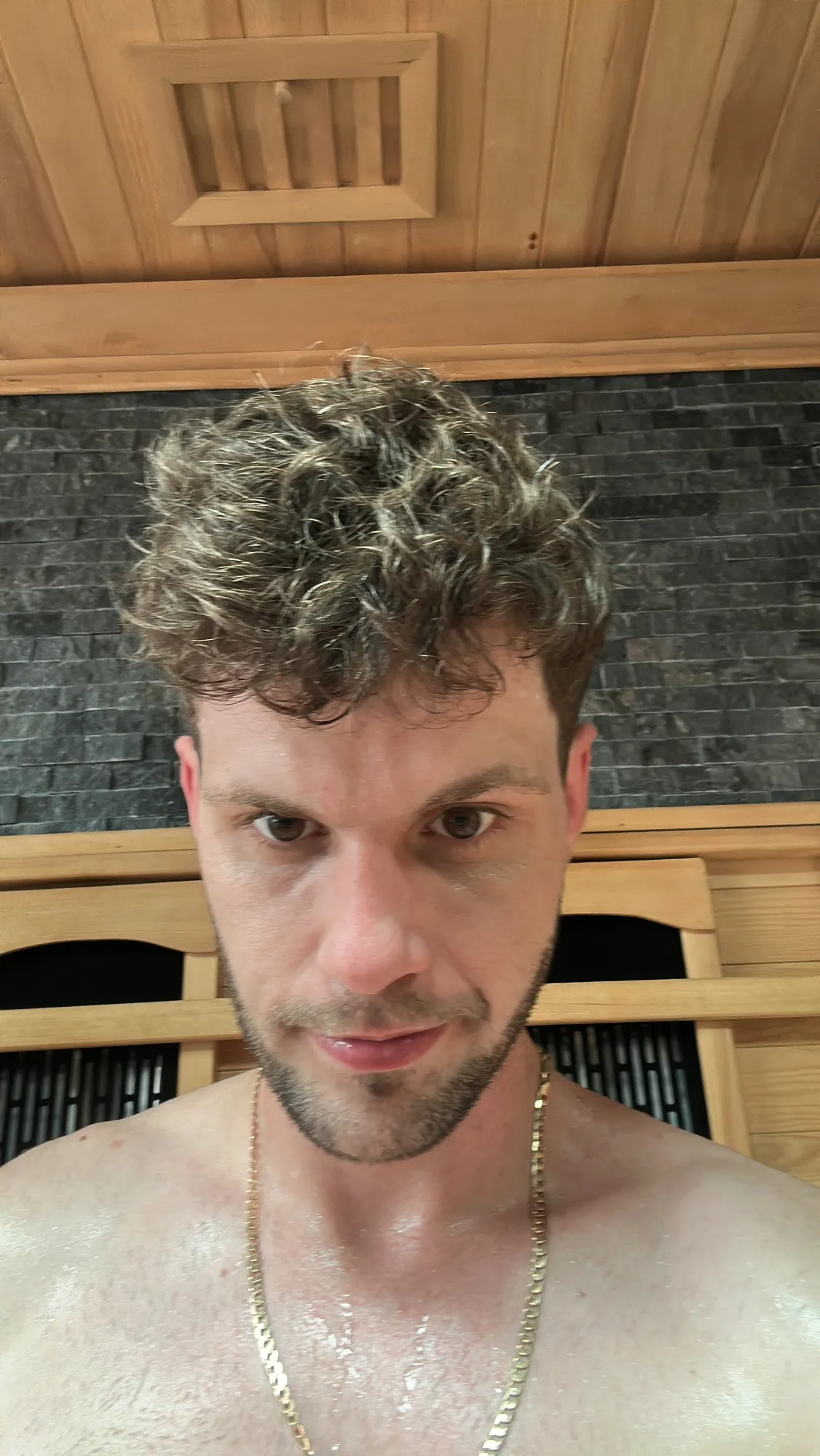
Heat
Sauna is the half people treat as an extra. It has the strongest longevity evidence of anything in this list, and it works on a mechanism cold can't touch.
- Frequency
- 3–5× per week, treated as non-negotiable recovery
- Dose
- 15–25 minutes. Hot enough to want out, not to white-knuckle
- Contrast
- 10–20 min heat → 1–2 min cold, 2 rounds max
- Timing
- After training, or late afternoon
- Avoid
- Marathon sessions, stimulants, and deep-fasted states
Heat triggers heat-shock proteins, which repair misfolded proteins and protect cells under stress. Cold does not do this. It's the one mechanism where heat is unique rather than complementary. That's why sauna sits in the recovery slot rather than the optional slot.
It also functions as passive cardio. Heart rate sits at 120–150 bpm without any joint load, roughly zone-two work while sitting still. The Finnish longitudinal data on frequency and all-cause mortality is the strongest evidence base attached to any protocol I run.
What it is not is a calorie tool. Thirty minutes is roughly a twenty-minute walk. The weight that disappears afterwards is water and electrolytes. People conflate sweating with fat loss and then over-invest in the wrong thing.
The version that actually feels transformative is contrast: sauna, then cold, repeated. You get vascular expansion, autonomic oscillation between sympathetic and parasympathetic, both heat-shock and cold-shock proteins, and a dopamine elevation that lasts hours. Finish cold for alertness. Finish hot for relaxation.
Consistency beats duration. Longer sessions are the most common way to get less out of it.
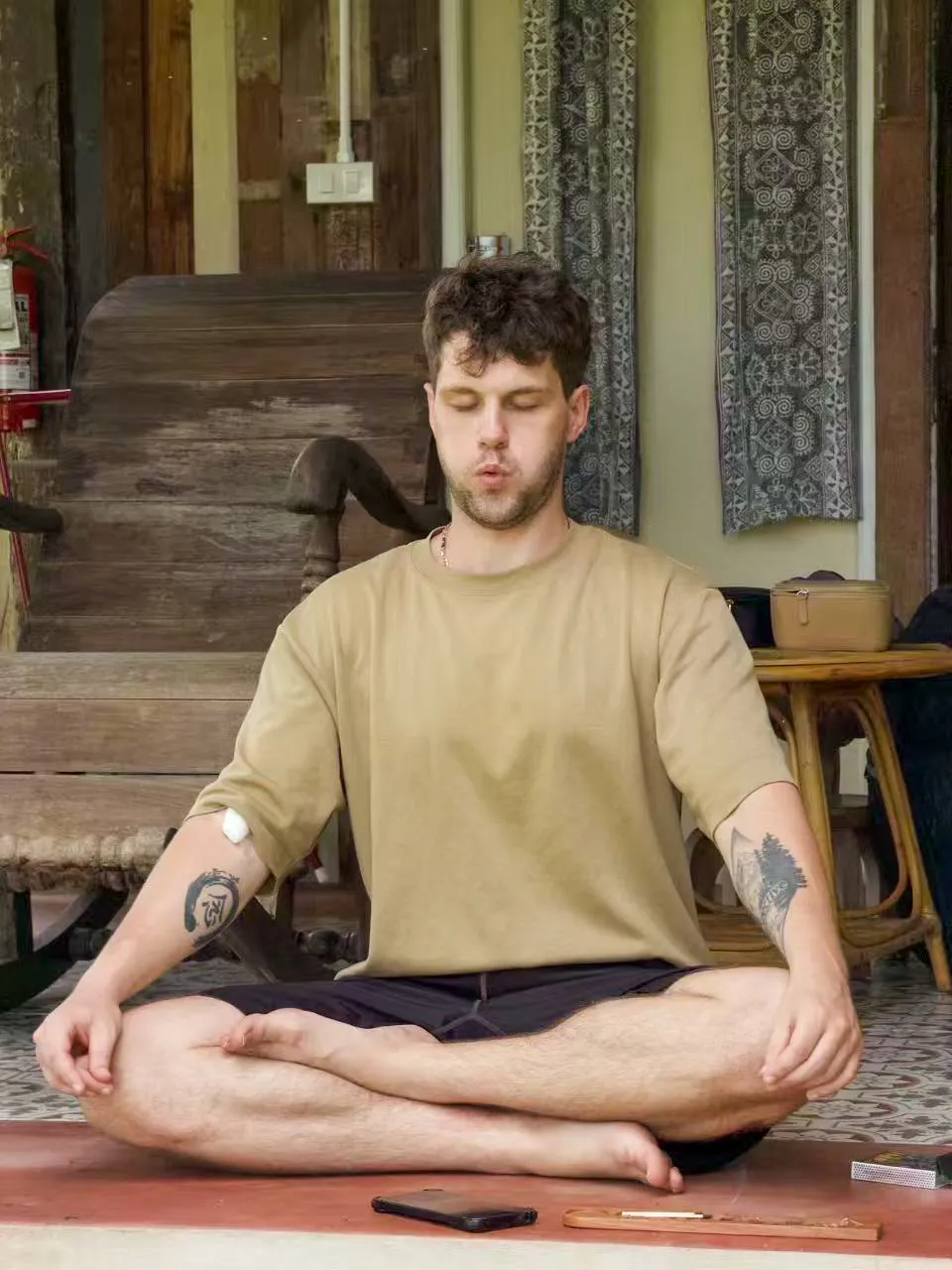
Breathwork
Diagnostic first. Inhale length is a live read on which nervous system you're running. That decides which protocol to use, not the other way round.
- Read — urgency
- 3–4s comfortable inhale
- Read — neutral
- 6–8s
- Read — parasympathetic
- 10s+
- Resonance ratio
- ~4s in / 6s out, six cycles a minute
- Session length
- 4–7 minutes. Past that, it inverts
- Daily
- Morning · mid-work · evening, distinct purposes
The first genuinely useful thing I learned about breath wasn't how to do it, it was how to read it. Comfortable inhale length tracks state closely. Three to four seconds means sympathetic dominance: defence mode, attention biased outward, blood away from the gut. Six to eight is neutral or recovering. Ten or more means full parasympathetic access is actually available. Nothing else in a normal day gives that clean a read on where you are, and it takes about fifteen seconds to check.
That matters because most breathwork advice is written for someone who is already calm, which is precisely the state in which nobody needs it. Reading first, then choosing, is the whole difference between a practice that works under load and one that only works on a Sunday.
Three gears, three physiological targets. Gear 1, recovery, is slow nasal breathing at 4 in and 6 out with no holds. Use it after training, during illness, or any day the system is already taxed. Gear 2, reset, is box breathing at 4-4-4-4, one or two rounds only, to interrupt a stress loop without stimulating. Gear 3, controlled stimulation, is cyclical fast breathing followed by breath holds. These are the Wim Hof–adjacent protocols that spike alertness and train CO₂ tolerance. My mistake for a long stretch was running Gear 3 when I needed Gear 1. The energy response felt productive at the time and the cost turned up later in the day.
The daily structure is three short sessions with distinct purposes rather than one long practice. Morning sets a parasympathetic baseline before the laptop opens. Mid-afternoon interrupts cognitive fog without requiring a full break. The point is to return to work immediately, not to pause it. Evening signals the work cycle is closed. Past about seven minutes a session, returns diminish and eventually invert into mental fatigue rather than calm.
Resonance breathing runs around four in, six out, roughly six cycles a minute. It has the most consistent effect of anything I've used. Part of that is simply that it's sustainable. A ten-second cycle is the longest most people can hold for several minutes without it feeling like a task. Techniques needing unusual counting or a visual anchor drop out of use faster than simple ratio breathing, regardless of how good they look on paper.
Everything above is the physiological half. There's a separate practice I run: ascending sets of pumping breath with long empty-lung holds, built around an explicit intention. The framing is frankly not physiological at all. It lives on the Spiritual page rather than this one, because that's where the honest version of it belongs.
What I underinvested in for years was the two or three minutes between finishing a session and starting work. The breathing resets the baseline. The transition is what protects it. Without that bridge the state survives about five minutes once demands arrive. A slow walk to the desk, one written intention before any application opens, then work. That sequence ended up mattering more than which technique I'd just used.
Inhale length is a diagnostic, not a technique. Read the state first. Choosing the wrong gear costs more than skipping the session.
Stretching & yoga
Built around relearning rib-and-pelvis mechanics. Separate morning, evening, Yin and deep-work sequences, sized to fit around training rather than compete with it.
- Baseline
- ~45 min, scalable 30–60
- Hinge reset
- 30 min, 3–4× per week
- Yin
- Once weekly, rest day, long holds
- Neurological decay
- ~2–4 weeks untrained
- Structural regression
- ~6–8 weeks+
- Regain rate
- 2–3× faster than the original build
The frame I had wrong at the start was treating flexibility as a fixed trait. It's adaptive. It decays on the neurological side first, within roughly two to four weeks of not training it. The structural side regresses far more slowly, six to eight weeks and beyond. The practical consequence is that frequency beats duration: ten minutes daily outperforms an hour weekly by a wide margin. Regaining lost range after a gap happens two to three times faster than the original build. Both the neural pathway and the tissue remodelling already exist. That reframe moved me off trying to commit to long sessions and onto holding a daily floor.
The baseline sequence runs about forty-five minutes in five phases. First, joint mobilisation and cat-cow to activate. Then core integration, targeting deep abdominal control rather than surface strength. Spinal and shoulder restoration with controlled thoracic rotation follows. Then flexibility expansion through hamstrings, adductors and hip flexors. Finally, a full down-regulation to close. The order matters more than the content. Dynamic before static, breathwork at the end. Skipping the cooldown consistently produced worse outcomes than simply running a shorter session, which took me an embarrassingly long time to notice.
There's a separate thirty-minute reset for anterior pelvic tilt and a limited hip hinge, run three or four times a week. It has four blocks. A stack reset using 90/90 hip lifts, rib-focused cat-cow and deadbugs. An anterior chain release through couch and half-kneeling hip flexor work. A posterior chain block using wall hip hinges, half-monkey and Jefferson curls. Then integration ending in a passive forward-fold hang. I track finger-to-floor distance weekly as the single objective marker. Everything else about mobility work is easy to feel good about and hard to verify.
Yin runs on a different principle. It requires holds most people exit too early. The sequence: forward fold, butterfly, pigeon, lizard, frog, sphinx, thread-the-needle, supine hamstring, reclining twist, then legs up the wall to close. Most holds sit in the five-to-seven minute range. Once a week on a rest day, low light, slow nasal breathing throughout, and treated explicitly as a recovery modality rather than a session. Framing it as training is how it ends up being rushed.
Morning is thirty to forty minutes and dynamic: joint rotations from the ankles up, then active spinal work. Evening is shorter and entirely passive, two to four minutes a hold. I'm still inconsistent with the evening one, particularly when the day runs late, and three or four nights a week is the realistic floor. Claiming daily adherence would make the system look better and be less useful.
Separately from the maintenance work there's a bucket list, and I'd rather label it as aspiration than pretend it's current practice. These are strength targets rather than flexibility ones. Upper body: chaturanga, crow and side crow, firefly, eight-angle, handstand, forearm stand. Integration: peacock, scorpion, one-legged crow, press-to-handstand and flying pigeon. Framing yoga as bodyweight strength training rather than stretching is what made it interesting to me again after years of finding it boring. The mobility work is what makes the strength work reachable. The list is what stops the mobility work becoming an end in itself.
Flexibility is neurological before it's structural. The nervous system learns depth is safe. That learning decays without maintenance, and returns faster than it was built.

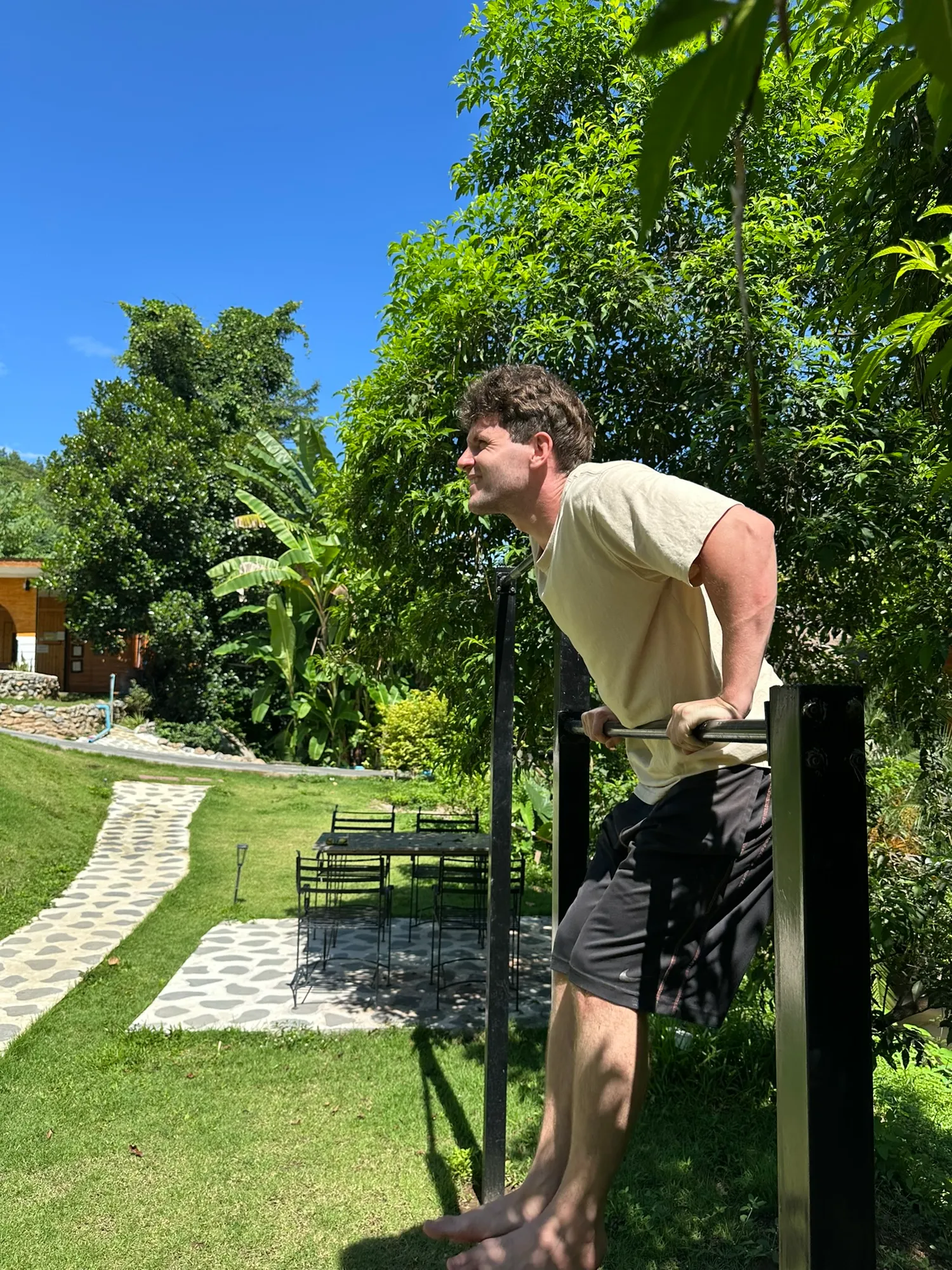
Fitness challenges
Booked events used as an adherence mechanism rather than a discipline story. Internal motivation doesn't scale reliably across a full year.
- Hyrox format
- 8 × 1 km run + 8 functional stations
- Social structure
- Doubles and Relay — training becomes shared
- Trail progression
- Chiang Mai UTMB 20K → 50K
- Vertical
- Doi Suthep — weekly, no travel required
- Climb session
- 45–60 min, 400–600 m vertical
- Benchmark
- 800 m/hr on stairs · 700–800 m/hr on Suthep
- Race-effort rate
- 400–500 m/hr — the number that matters
- 20K model
- 3:45–4:30 trained · 7:00 cutoff
The logic is straightforward and slightly unflattering: motivation doesn't hold across twelve months, and no amount of insisting otherwise has changed that. A date, a paid registration, and another person who knows you're doing it. Together they produce a different quality of commitment than a goal written in a notebook. This is adherence architecture, not willpower. I choose events as much for their social structure as their physical demand.
Hyrox is the most directly transferable format for a hybrid base: eight rounds of a 1 km run alternating with eight functional stations. SkiErg, sled push, sled pull, burpee broad jumps, row, farmers carry, sandbag lunges, wall balls. The format is identical at every event globally, which makes preparation precise rather than vague. The Doubles and Relay formats split the stations between two athletes while both still run. That creates shared pacing and shared suffering in a way solo training can't manufacture. The underlying fitness it demands is the same base consistent gym and trail work already builds: aerobic capacity, lower-body strength, sustained grip. The event doesn't require a new programme. It points the existing one at a date.
Trail events supply the outdoor, terrain-specific half. The near-term target is the Chiang Mai UTMB 20K, with the 50K as the step after. Doi Suthep sits close enough to the city that weekly vertical is available without travel. That matters more than it sounds. The difference between training that needs a car and training that doesn't is most of the difference between doing it and not. The structure is three session types. A long trail session of two to three hours mixing climb and descent. A focused climb session of 45 to 60 minutes targeting 400 to 600 metres of vertical. And the gym work kept fully intact rather than substituted. Lower-body strength is an advantage in both formats.
The number I train against is vertical rate. On stairs I've hit 800 metres of gain in an hour. That sits in the strong-amateur band. Decent amateur trail runners run 400 to 600 an hour, strong runners 700 to 900, competitive mountain runners 1,000 to 1,200. On Doi Suthep it's 700 to 800 metres in an hour to an hour fifteen. The number that actually matters for racing is lower: 400 to 500 an hour. That's the sustainable rate across a multi-hour effort, and the figure UTMB is really asking for. A one-hour benchmark flatters you in a way a four-hour race doesn't.
Working the 20K backwards from that: roughly 1,200 metres of climbing at race effort is two and a half to three hours including micro-stops. Add an hour to ninety minutes of descent and runnable flat. That's a 3:45 to 4:30 finish trained, or 4:30 to 5:00 conservatively with long breaks and slow climbs. The cutoff is seven hours, which at current fitness would take an injury, an hour stopped, or heat collapse to miss. Writing that down is partly the point. A target you've actually modelled is much harder to quietly renegotiate than one you're carrying around as a feeling.
What I got wrong moving into trail was assuming a strong gym and cardio base would carry cleanly onto mountain terrain. It doesn't. Not completely. Eccentric loading from technical descent is a different stressor to anything you can replicate on flat equipment. I only worked that out after adding specific downhill sessions and discovering how much they hurt. Calves, quads and ankle stabilisers need conditioning for the grinding climb and the descent afterwards that gym work simply doesn't provide. It's a common planning error for anyone coming from a gym background, and I made the standard version of it.
The calendar also supplies the periodisation a pure gym routine tends to lack. Without a date, volume and specificity both drift quietly. With one, the training week organises itself into build, specific and taper without needing to be manufactured. The social layer compounds it. Sessions involving another person, a defined route and a shared target date get completed at a rate that solo sessions with identical intent do not.
The event date is the programme. Without an external commitment and a social context, both volume and consistency fall to a fraction of stated intent.
Calisthenics & the long split
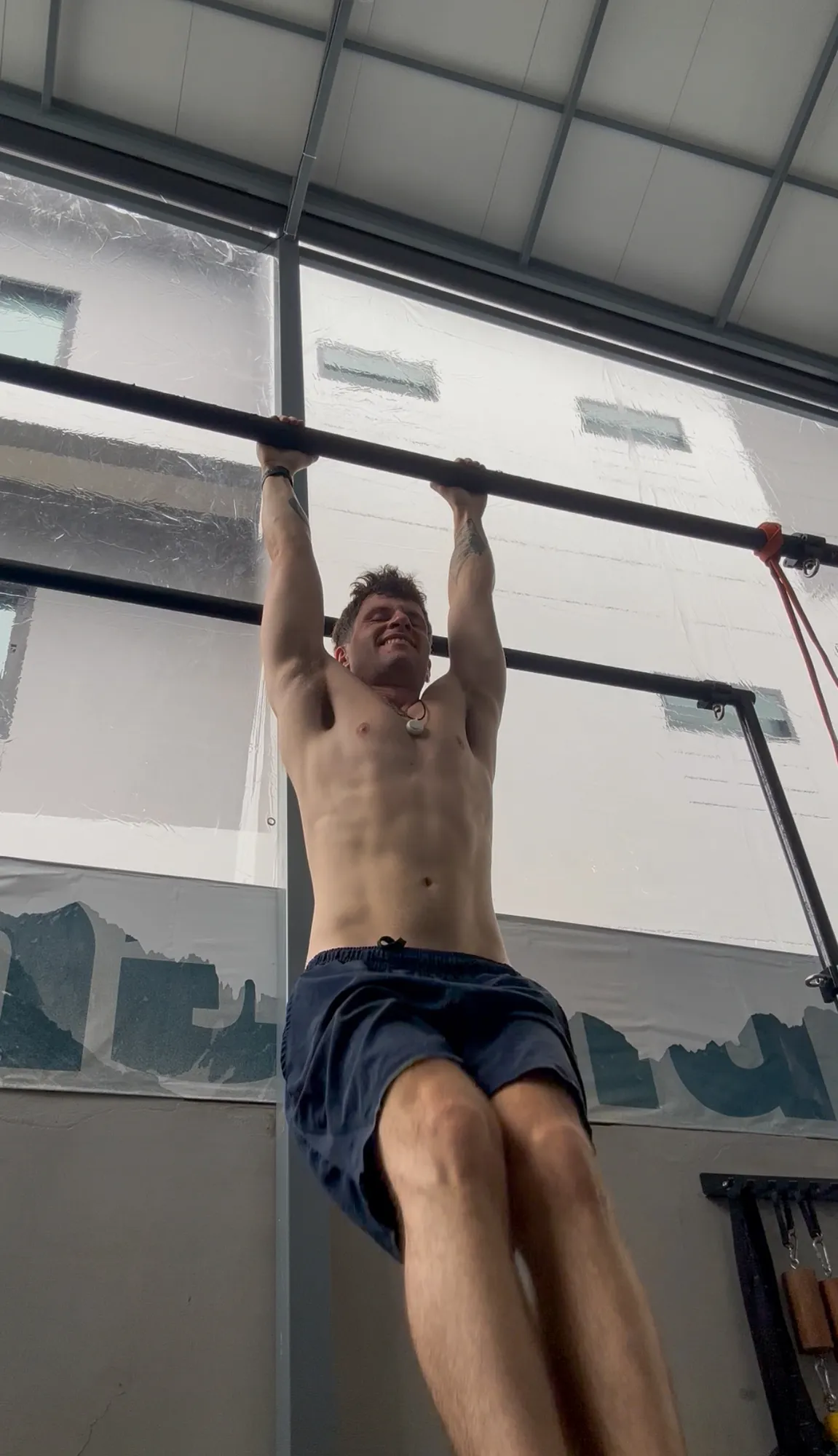
Bodyweight strength trained on a multi-year roadmap rather than an eight-week one. Chosen because it's the only training modality I can see myself still running at sixty.
- Split
- Push / pull / legs / skill, 4–5× week, 60–75 min
- Pull-ups
- 6–8 strict → 12–15 clean
- L-sit
- 15s → 30s
- Handstand
- Wall 30s → freestanding 10s
- Forearms
- 3–5× week, 60–90 sets a month, trained first
- Grip
- Twice weekly — see the constraint analysis below
- The endgame
- 1 gym · 1–2 calisthenics · 1 mobility, forever
The current block is an eight-week intermediate programme on a push/pull/legs/skill split. Four to five sessions a week at sixty to seventy-five minutes. Monday push: dips, handstand pushups, pseudo planche pushups. Tuesday pull: pull-ups, archer rows, explosive chin-ups. Wednesday legs and core: pistol squats, Bulgarian splits, hanging leg raises. Thursday is skill and mobility: handstand balance, L-sit, scapular work. Friday is a hybrid full-body superset. Weekends are rest or an easy jog.
The targets over those eight weeks are specific. That's the only reason they work. Pull-ups go from six to eight strict up to twelve to fifteen clean. Dips go from eight to ten up to weighted sets of ten. Pseudo planche pushups from five up to ten or twelve. L-sit from fifteen seconds to thirty. Wall handstand from thirty seconds to a ten-second freestanding hold. Pistol squats from assisted to five full-range each leg. A block without numbers attached is just attendance.
Above that sits a phase roadmap measured in years rather than weeks. The first six months is the base: crow, headstand, wall handstand, L-sit, a clean push and pull foundation, pistol squat. Six to eighteen months is free handstand, muscle-up, front and back lever progressions, forearm stand, side crow, full splits. Eighteen to thirty-six is press-to-handstand, planche work, peacock, flying pigeon. Somewhere in the second phase, strength-to-weight leverage starts genuinely mattering. Around fifteen to eighteen per cent body fat is where these skills stop fighting you.
The version I'm actually building toward is the ten-to-fifteen-year split. One gym day for compound strength, one or two calisthenics days for skill and control, one yoga or mobility day for restoration. Three or four sessions a week, indefinitely sustainable, pain-free. That's the whole design goal: not a peak, a plateau I can hold for decades. Most training programmes optimise for a twelve-week transformation and quietly assume you'll figure out year three yourself.
One small thing that's paid off disproportionately: training forearms first, when they're freshest, not as an afterthought at the end. Heavy days twice a week: reverse curls, hammer curls, wrist curls, wrist roller or plate pinch to failure. Pump days two or three times: farmer's carries, band work, fat-grip or towel hangs. Sixty to ninety sets a month total. Size shows at four to six weeks, density and vascularity at eight to twelve, then it holds on twice a week. Grip is the thing that fails first in both hybrid racing and every hanging skill on the roadmap, and almost nobody trains it deliberately.
Pick the modality you can still run at sixty, then work backwards. A programme that peaks in twelve weeks has no answer for year three.
Grip
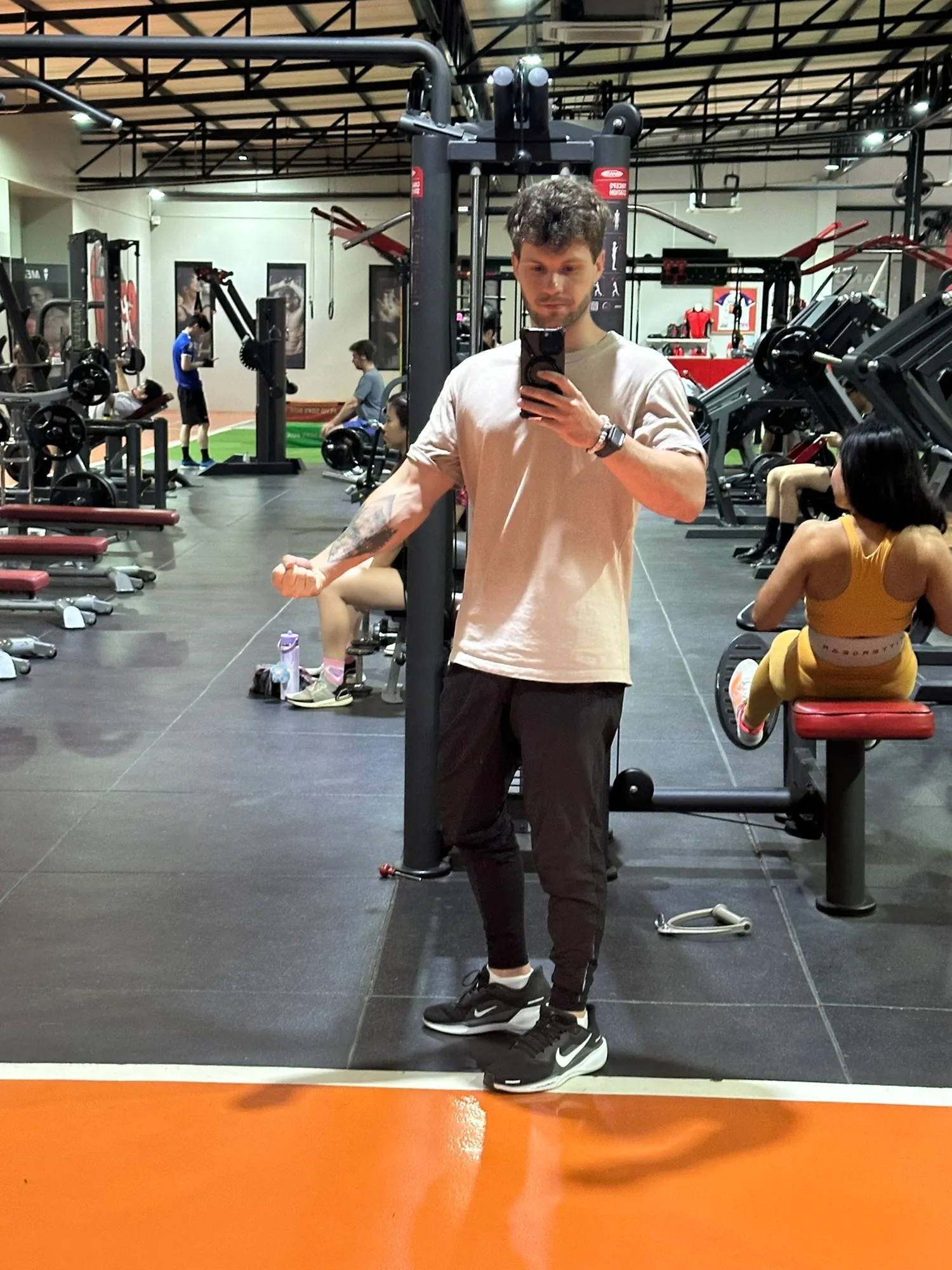
Not a training plan. A constraint analysis. My hands are roughly 15 cm against a male average nearer 19, and once I measured what that actually costs, the programming decided itself.
- Hand length
- ~15 cm vs ~19 cm male average
- Rolling Thunder
- ~45 kg → mid-50s (6–8 wks) → 60 (~4 mths)
- Raw one-hand DL
- 72–78 kg true max — capped by roll, not strength
- Hook one-hand DL
- 110 kg at ~72 kg bodyweight
- Pinch
- 25 kg plate
- Profile
- Specialised — hook and pinch strong, general crush capped
The numbers first, because they're the only reason the rest of this is interesting. Rolling Thunder max sits around 45 kg. Raw one-hand deadlift with no hook: 80 failed, 70 to 75 is doable, so the true max is somewhere in the low-to-mid seventies. Hook grip one-hand deadlift is 110 kg at about 72 kg bodyweight. Plate pinch is 25 kg. Those four numbers do not describe a consistent athlete. One of them is enormously out of line with the others, and working out why is the whole exercise.
The answer is that my limiter was never strength. It's bar roll. A shorter hand wraps less of the bar. That means less anti-rotation and less resistance to torque. The wrist simply can't counter that torque past about 75 kg on a raw lift. The muscle has more to give. The lever doesn't. Rolling Thunder punishes this harder than any other implement in grip training. That's precisely why the RT number looks weak next to the hook number. Hook grip removes the roll entirely, and the moment it does, thirty to forty kilos of latent strength appears out of nowhere.
Which reframes what kind of grip athlete I actually am. Not a general-crush athlete. That door is partly closed by hand geometry and no amount of training reopens it. Hook and pinch are disproportionately strong. Open-hand and thick-bar work look like the highest-potential directions, given how much torque the wrist is already handling. The useful move was to stop treating the weak number as a deficiency. Start treating it as information about where the returns are.
One caveat I want on the record, because it cuts against my own interest. Applying a leverage correction for hand size puts the RT equivalent somewhere around 60 to 65 kg, which would be a substantially different tier. That's a derived number, not a measured one. It's genuinely useful for deciding what to train and completely useless as a claim about where I rank. The temptation to quietly let a corrected figure become the one you repeat is exactly the kind of thing this page exists to resist.
Why bother at all: grip strength is one of the better single predictors of all-cause mortality in the literature. Strange fact, but well-replicated. More immediately, it's the thing that fails first in hybrid racing and in every hanging skill on the calisthenics roadmap. The targets are Rolling Thunder from 45 to the mid-fifties over six to eight weeks, and 60 by around four months. Hook from 110 toward 115 to 125 over a similar window. Slow numbers, trained twice a week, on the assumption that I'll want these hands working in forty years.
Measure the constraint before you program around it. A weak number is usually information about leverage, not about effort.

Chronotype & deep work
I spent years trying to be a 5am person. I'm not one, and forcing it cost me my best hours rather than adding any.
- 7–9am
- Wake slowly — light, water, walk. No pressure, no work
- 9–10:30
- Admin, movement, low-friction tasks
- 10:30–2:30
- Deep work. Phone off, one task, protected
- 2:30–4
- Circadian trough — walk, nap, calls
- 7–9pm
- Optional second wind — writing, reflection
- Caffeine
- Delayed 60–90 min after waking
Chronotype is a biological rhythm preference, not a habit. It decides when your brain actually performs, regardless of what your calendar says. Roughly half the population peaks midday. Only 15–20% genuinely peak early. The 5am-club framing is advice from a minority to everyone.
Mine came out as a late Bear with a Wolf crossover. Natural wake between 7 and 9. Real cognitive peak from about 10:30 to 2:30. A genuine trough mid-afternoon. A workable second wind in the evening. Nothing sharp exists before 10:30 no matter how early I get up.
The change that mattered wasn't waking earlier. It was protecting the peak block like a monk and stopping the attempt to do strategy work at 7am. Admin and low-friction tasks go in the ramp-up window. The trough gets a walk or calls, not another attempt at focus.
Two mechanical things carry most of the effect. First, delay caffeine roughly 60–90 minutes after waking. That lets it work with the cortisol curve rather than against it. Second, get 20–30 minutes of outdoor light before 9am to anchor the rhythm.
Don't fight the rhythm you have to get the one you read about. Find the peak, then defend it.
Sleep
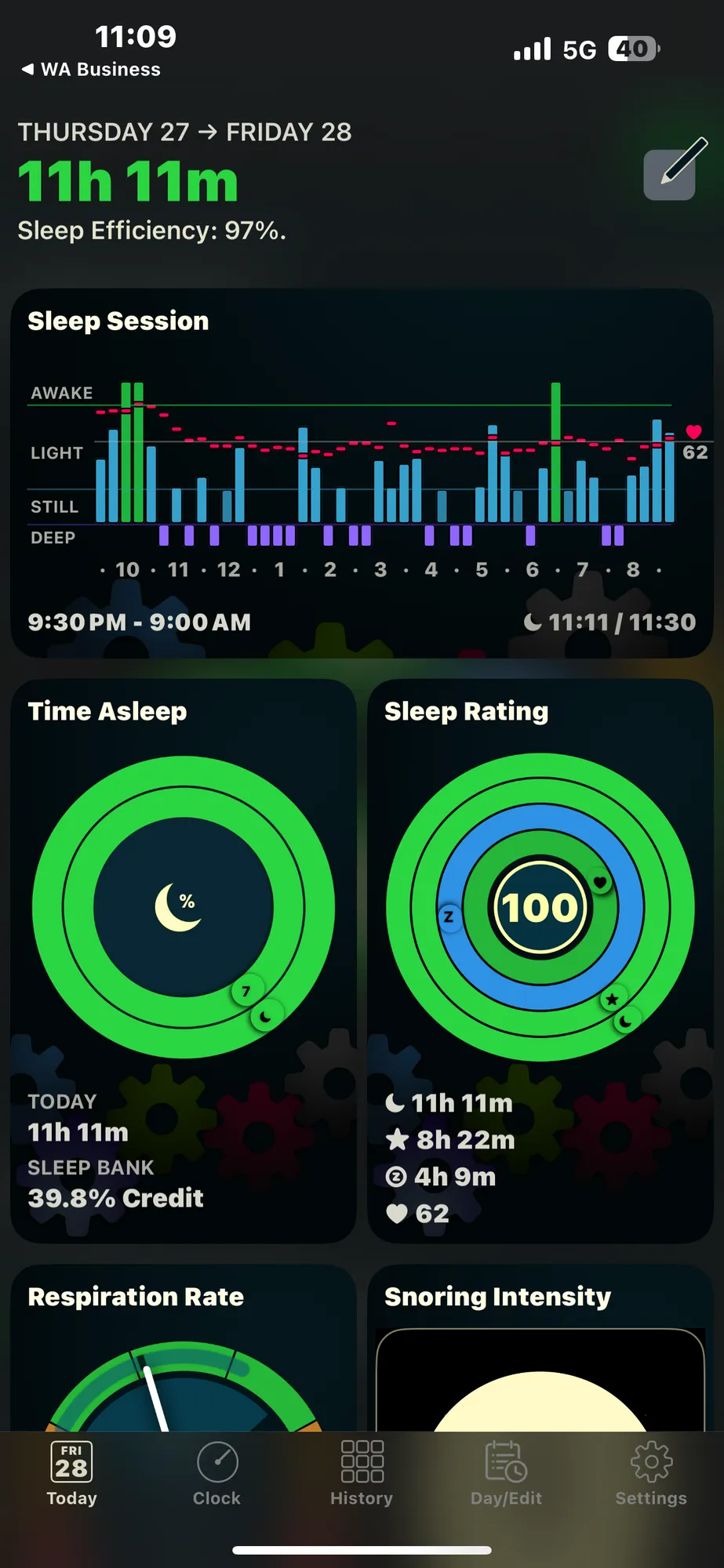
The primary recovery input in the system. Anchored by circadian timing rather than sleep aids, and fixed through environment before supplements.
- Window
- Consistent ±30 min
- Morning light
- 10–20 min outdoors, within an hour of waking
- Caffeine cutoff
- Early afternoon — 5–8h half-life
- Wind-down
- Screens off at T-90, lights dim at T-60
- Evening stack
- Magnesium glycinate, glycine, L-theanine, apigenin
- Room
- 17–19°C, pitch black, phone outside
- Last meal
- 2–3 hours before sleep
The highest-leverage variable in sleep quality is set in the morning, not at night. Ten to twenty minutes of outdoor light within an hour of waking suppresses cortisol at the right point. It sets melatonin release up correctly for the evening. Screens are not a substitute. A phone puts out roughly 500 lux. Outdoor light on an overcast day is 10,000 to 25,000. Done consistently, this one habit does more than most of the supplement stack combined. Missing it is often the actual cause of delayed sleep onset in an otherwise clean protocol.
The ninety-minute wind-down is the part I treat as non-negotiable. From ninety minutes out: no screens, no high-stimulation work. From sixty: lights dimmed warm, magnesium and glycine taken. From thirty: physical reading, journalling, or gentle stretching. The last ten minutes are box breathing and the phone in aeroplane mode. Most people resist this because it feels like lost productive time. It isn't. The cognitive output of the hours before adequate sleep is far lower than the same hours after it.
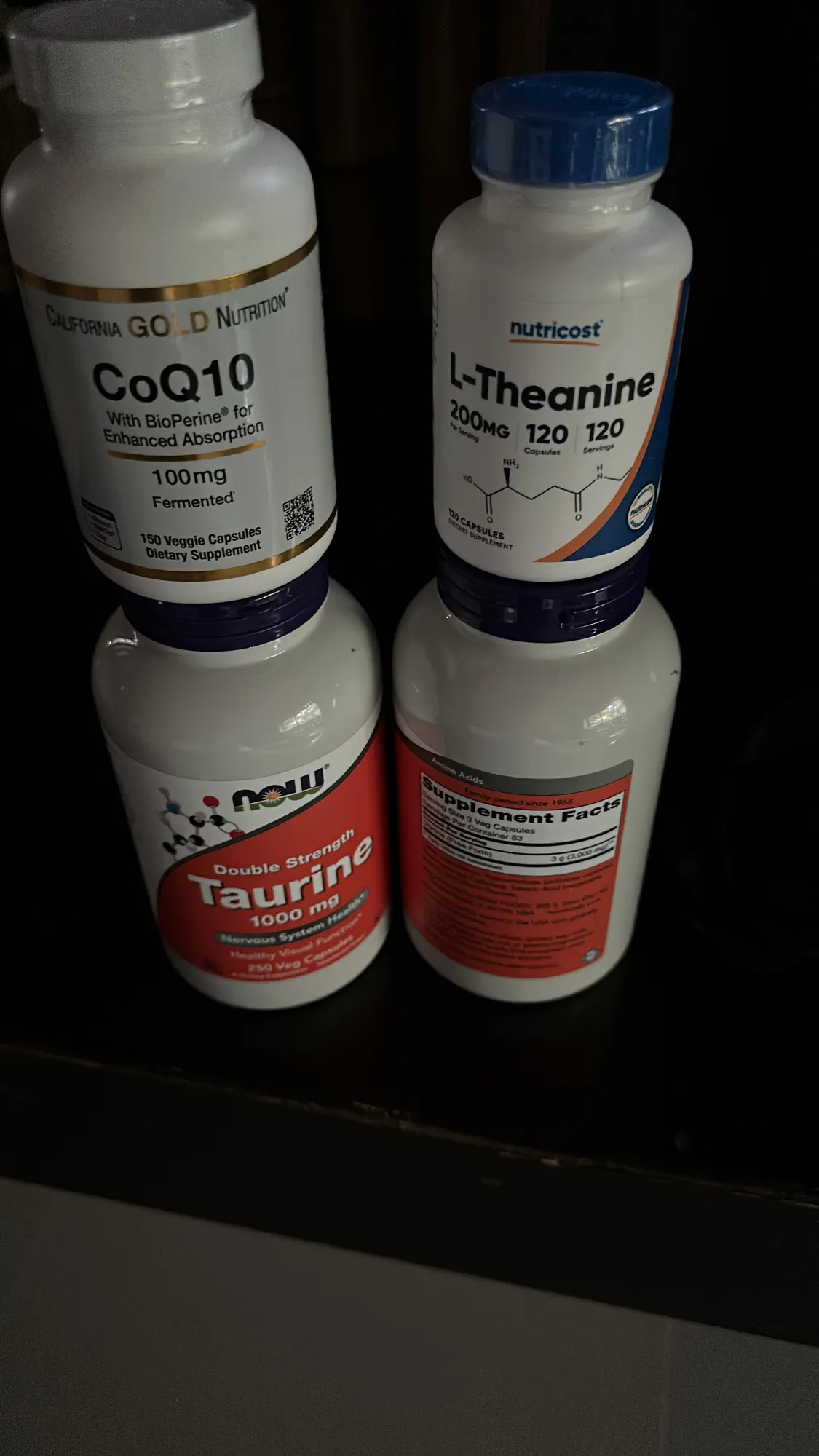
The supplement side is deliberately short. Magnesium glycinate for sleep latency. Glycine to lower core temperature and improve REM quality. L-theanine to dampen overthinking without sedation. And apigenin. Melatonin is deliberately absent from the nightly stack. Low doses are genuinely useful for a circadian reset after travel. But taken every night, melatonin suppresses your own production over time. It's the wrong tool for a chronic problem and a common way to make one worse.
Environment carries more weight than people expect. Seventeen to nineteen degrees, because a warm room directly suppresses melatonin. Complete darkness with every LED covered. Even low ambient light through closed eyelids measurably disrupts sleep staging. Phone out of the room. These aren't comfort preferences. They're the physical conditions under which sleep architecture works properly.
Two saboteurs worth naming plainly. Alcohol: two drinks suppress REM and heart-rate variability for the entire night, producing sleep that looks adequate on duration and isn't restorative. Caffeine: the half-life is five to eight hours, so a 3pm coffee still has a quarter to half its adenosine-blocking effect at 10pm. Cutting it early afternoon isn't conservative. It's just the arithmetic. The late-afternoon dip is adenosine pressure, and it's useful information rather than a problem to override.
Sleep quality is set in the morning. The light you get at 7am determines the melatonin you get at 10pm.

Fasting
Structured as a longevity protocol rather than a weight tool. A weekly long fast, a low-calorie day, and a deeper reset a few times a year.
- Weekly
- ~40 hours, dinner → lunch
- Mimicking day
- ~500–600 kcal, fat-dominant, 1× per week
- Deep reset
- ~70 hours, roughly every four months
- During
- 2–3L water + electrolytes. Black coffee or green tea allowed
- Breaking
- Protein and fat first. No large carbohydrate load
The core is a weekly fast of roughly forty hours, running dinner to lunch two days later. The duration is the whole point. Around eighteen to twenty hours, glycogen depletes and the body shifts to fat oxidation. By twenty-four to thirty-six, autophagy is meaningfully elevated. By forty, insulin and IGF-1 have both dropped and growth hormone has risen substantially. A 16:8 window delivers almost none of this at any real intensity. It mostly just compresses eating. Forty hours is the minimum dose that actually does the cellular housekeeping.
Three times a year I run a longer one, around seventy hours. That targets something the weekly fast can't reach. Past roughly forty-eight to sixty hours the body starts recycling damaged immune cells, with regeneration on refeed. I treat these as scheduled maintenance rather than feats of willpower. They need preparation: electrolytes loaded the day before, a clear calendar, no travel. Recovery is faster than most people expect once adapted.
On one other day a week I run a fast-mimicking day at around five to six hundred calories, skewed deliberately. Protein very low, carbohydrate low and fibrous, fat carrying most of it. The point is to keep mTOR and insulin suppressed without triggering full starvation signalling. It's a lever for metabolic flexibility without the logistics of a full fast.
During a fast: electrolytes in water throughout, two to three litres of fluid, black coffee and green tea allowed. The most common failure is taking nothing, getting a headache and fatigue on day one, and concluding the fast is too hard. It's almost always electrolyte depletion, and it's trivially fixable.
The refeed matters as much as the fast. Breaking forty hours with a large carbohydrate meal lands a glucose spike on top of depleted glycogen and sensitised insulin receptors. The resulting whiplash gets misread as post-fast weakness. I break with lean protein and fat, and no significant starch in the first meal. Gradual re-entry, not a reward.
The most powerful longevity lever isn't a supplement. It's controlled periods of not eating.
The supplement stack
Built in tiers by evidence quality. High-certainty foundations first, experimental longevity compounds as a clearly separate layer on top.
- Tier 1 — foundation
- Creatine · magnesium glycinate · D3+K2 · omega-3
- Tier 2 — recovery
- Glycine · taurine · collagen + vitamin C
- Tier 3 — experimental
- NAD+ precursors, sirtuin activators — labelled as such
- Pulsed
- Senolytics, a few days per month, not daily
- Adaptogen
- Ashwagandha, evening, skipped on low-stress days
- Rule
- Fat-soluble with fat. Never merge the AM and PM stacks.
The most common mistake I see is starting with the exotic molecules. Most people are poorly maintaining magnesium, vitamin D and omega-3 long before they need NAD+ precursors. So the stack starts with what has the strongest human trial evidence and the broadest systemic effect, and everything sits in a named tier. Nothing moves up a tier because it's expensive or currently fashionable.
The foundation is four things. Creatine monohydrate has the strongest evidence in the entire stack: hundreds of controlled trials, cognitive and muscular benefit, unambiguous long-term safety. Magnesium glycinate at night, for bioavailability and gut tolerance. D3 with K2, taken with fat. The K2 handles calcium routing and D3 without it is a half-measure. And algal omega-3 rather than fish oil, which removes the oxidation and heavy-metal question entirely.
The second tier is recovery and cellular. Glycine before sleep lowers core temperature and supports collagen synthesis. One of the cheapest and most underrated things available. Taurine, which got considerably more interesting after the 2023 work linking deficiency to accelerated ageing in mammals. Collagen peptides with vitamin C before training. The vitamin C isn't optional. It's required for the synthesis to happen at all.
The third tier is explicitly experimental and I'd rather label it than dress it up. NAD+ precursors and sirtuin-activating compounds have a plausible mechanism and strong animal longevity data. Human outcome data remains thin. Resveratrol has a separate problem: oral bioavailability is genuinely poor, with much of it metabolised before it reaches circulation. I take these because the safety profile is good and the downside is low, not because the evidence is settled. Senolytics I run pulsed for a few days a month rather than daily, because the mechanism makes more sense that way.
Timing matters more than people assume. Fat-soluble compounds need a meal with fat in it or they largely don't absorb. Magnesium and glycine belong together at night. The morning stack and the evening stack shouldn't be collapsed into one for convenience. The circadian context of each compound is part of the dose.
Build from the evidence up. The exotic longevity molecules sit on top of a foundation, not instead of one.
Cognitive resilience
Quarterly benchmarking of processing speed and working memory. The goal is to catch drift early, while the prevention window is still open.
- Reaction time
- 5 runs averaged, quarterly
- Working memory
- Scored against age-matched percentile
- Dual n-back
- Monthly. Flag on two consecutive declines
- Cross-reference
- HRV over the same period
- Escalation
- Three quarters unexplained → bloodwork, not more supplements
- Conditions
- Same day, same time, same state. Otherwise it's noise
The argument for tracking cognition in your thirties is simple. The prevention window opens in your thirties and forties and closes well before symptoms appear. By the time decline is subjectively noticeable, measurable change has often been present for years. Nobody would be surprised that untracked physical fitness quietly deteriorates over a decade. The same happens with cognition, with higher stakes. This isn't self-surveillance. It's having a real data point to return to when something feels off, instead of guessing.
The quarterly battery takes under half an hour. Reaction time, five runs averaged, as a processing-speed marker sensitive to sleep debt, stress and alcohol. A working memory test scored against age-matched peers. Verbal fluency tested informally through timed writing sprints. The discipline is doing it the same day each quarter, at the same time, under the same conditions. Testing after travel or a bad night produces noise. Noise is worse than no data because it gets treated as signal.
Monthly I run a dual n-back session, which requires holding both a visual position and an auditory letter n steps back simultaneously. The level I can sustain is the monthly marker. A drop of one level held across two consecutive months is a flag rather than a crisis. The response is to check the lifestyle variables first: sleep, training load, diet, alcohol, anything that changed in the stack. I cross-reference against heart-rate variability from the same period, because low HRV and cognitive drift together almost always share an upstream cause.
If scores dip, the response is tiered. First, find the stressor. In most cases there's an obvious one and the protocol is simply to address it. Second, check the foundational inputs. Third, if two or three consecutive quarters decline with no lifestyle explanation, the correct move is bloodwork, not more supplements. Speculatively stacking compounds against an unexplained trend is how people spend a year treating the wrong thing.
What doesn't work, and gets over-invested in: the gamified brain-training apps. They reliably improve your score on their own tasks and transfer poorly to anything else, and the meta-analyses on this are consistent. N-back has better transfer data but is still more useful as a measurement tool than a training one. The genuine levers are upstream and unglamorous: sleep staging, zone-two cardio, creatine, and not drinking much. Everything else is marginal by comparison.
The prevention window is your thirties. By the time symptoms appear, most of the opportunity is already spent.

Environmental health
An audit of what I'm chronically exposed to, ranked by impact. Living in Chiang Mai moves air quality to the top by a distance.
- Burn season
- ~February–May, worst in March–April
- Purifier
- HEPA H13+, bedroom and main workspace
- Windows
- Closed above AQI 100. Ventilate at dawn only
- Burn-season support
- NAC 600–1,200 mg + omega-3 + vitamin C
- Filters
- Every 3–6 months in season, not annually
- Ranking
- Air → water → plastics → cookware and personal care → light
- Ranked low deliberately
- EMF — thinner evidence than the alternatives
Most environmental health writing assumes a temperate climate where air pollution is background noise. Northern Thailand in burn season is not that context. Agricultural burning across the surrounding valley and highlands pushes particulate levels into genuinely hazardous territory by any classification standard. This happens for weeks at a time, roughly February through May, with the worst of it in March and April. That's chronic particulate exposure driving oxidative stress and inflammation. Not a nuisance you manage with a good attitude. It requires infrastructure decisions, and it's the single highest-return intervention available where I live.
The indoor strategy starts with a HEPA H13 or better running in the bedroom and the main workspace. Check IQAir or AirVisual daily for AQI. The window rule is simple: closed whenever AQI is above 100, opened only around dawn when readings tend to be at their lowest. Filters get replaced every three to six months through burn season rather than annually, because a saturated filter is decorative. I add NAC at 600–1,200 mg, omega-3 and vitamin C through the worst months for airway oxidative stress. Always alongside filtration, never as a substitute for it. A lot of people quietly collapse that distinction because supplements are easier to buy than behaviour is to change.
Water is second, and close. The regional default is bottled water in PET plastic, frequently stored in heat or direct sun. Antimony and BPA leaching from heat-stressed plastic is a documented problem rather than a theoretical one. I moved to glass and stainless for daily carry. The carbon-plus-reverse-osmosis setup at home took me considerably longer than it should have. I knew it was the right call well before I acted on it. The convenience of bottled water here is real, and convenience reliably beats intention whenever the friction stays high. That gap between knowing and doing is the most honest thing on this page.
The plastics audit extends to food contact: nothing heated in plastic, glass or ceramic for storage, no reuse of single-use bottles. At the home tier, cookware comes first: replacing non-stick Teflon with ceramic, cast iron or stainless to cut PFAS exposure. Cleaning products moved to vinegar, bicarb and enzyme-based rather than synthetic fragrance. And fragrance-free enzyme laundry detergent. Each one is individually trivial and only meaningful across a multi-year exposure window, which is exactly why they're easy to never get around to.
Personal care is the tier people skip because each item feels too small to matter. That logic is precisely what makes a decade of daily exposure add up. Sulfate- and fragrance-free shampoo and body wash: castile soap and bar soap work fine. Mineral sunscreen with zinc oxide or titanium dioxide rather than chemical filters. Ceramide-based moisturiser. Baking-soda, magnesium or zinc deodorant. Essential oil diffusers and beeswax instead of scented candles and synthetic fresheners. On the oral side: bicarb brushing once a week and no more than twice, because past that it abrades enamel. A coconut-based toothpaste with calcium carbonate or hydroxyapatite. Oil pulling with sesame or coconut. And tongue scraping in the morning — the highest-return thirty seconds in the whole routine.
Light and circadian hygiene sit lower in the audit. Not unimportant, just lower return than air, water and plastics. Morning sunlight shortly after waking, warm lighting in the couple of hours before sleep, less screen proximity in the final hour. I deliberately rank the wireless and EMF concern below all of the above. The evidence for harm at normal residential exposure is substantially thinner than the evidence on particulates, microplastics and endocrine disruptors. I'd rather put the effort where the data is strongest than where the discourse is loudest.
Environmental health is the terrain everything else runs on. Where there's a defined burn season, the interventions that matter are infrastructure, not attitude.
Daily
- Training
- Swimming
- Range-of-motion work
- Hydration
- Sunlight exposure
Cyclical
- Progressive muscle relaxation
- Massage
- Blood donation
Inputs
- Food & diet
- Tea
- Caffeine timing
- Red-light therapy
Low-tox swaps
- Cookware — ceramic, cast iron or stainless, never non-stick
- Cleaning — vinegar, bicarb, enzyme-based
- Laundry — fragrance-free, enzyme-based
- Bottles — glass or stainless, never reused PET
- Electrolytes to remineralise RO water
Measurement
- Biomarker tracking
- Biological age testing
- DEXA — bone density and composition, mid-30s
- Diagnostics
- Hearing
None of this is medical advice — it's what I do, not what you should. Several protocols here have real contraindications, and a few areas of my health system stay private permanently.