·5 min read
The Effortless Sales Weapon Nobody Is Using Yet
I tested AI Studio for building client demo sites as lead magnets. The speed is real, but production-ready? Not yet. Here is the honest breakdown.
I spent last week building demo websites for local businesses using GHL's AI Studio. Not as a test. As actual outreach material — sites I'd send to prospects before a sales call.
The results were better than I expected. And worse. Here's the honest breakdown.
The Experiment
I've been cold-calling handymen, plumbers, and local service businesses for my agency. The usual pitch — "let me build you a site, run your ads, get you leads" — works, but it's slow. Everyone's heard it before.
So I tried something different. Before the call, I'd build them a demo site. Their business name. Their services. A real website they could look at on their phone while I talked them through it.
GHL's AI Studio can generate a multi-page site from a text prompt in minutes. Add the business name, pick the industry, describe the services, and it spits out something that looks... surprisingly legit.
What Actually Worked
The quality shocked me. Not because it was perfect — but because it was better than what most of these businesses already have.
Go look at any tradie's website right now. Odds are it's a WordPress theme from 2019, stock photos of a guy in a hard hat, and a contact form that may or may not work. That's the competition.
AI Studio output was clean, modern, and mobile-responsive out of the box. The layouts made sense. The copy was serviceable. And editing was dead easy — just tell it what to change in plain language and it adjusts.
The real power wasn't the site itself. It was the reaction. When you send a prospect a link to a website with their name on it before you've even had a proper conversation, it changes the dynamic completely. You're not pitching anymore. You're showing.
Where It Fell Short
Let's not pretend this is ready for production.
During the week, I hit serious latency issues. Pages taking 30+ seconds to generate. Crashes mid-build that lost my work. For a tool that's supposed to save time, that's a dealbreaker when you're trying to batch out five demo sites in an afternoon.
The sites themselves have clear ceilings:
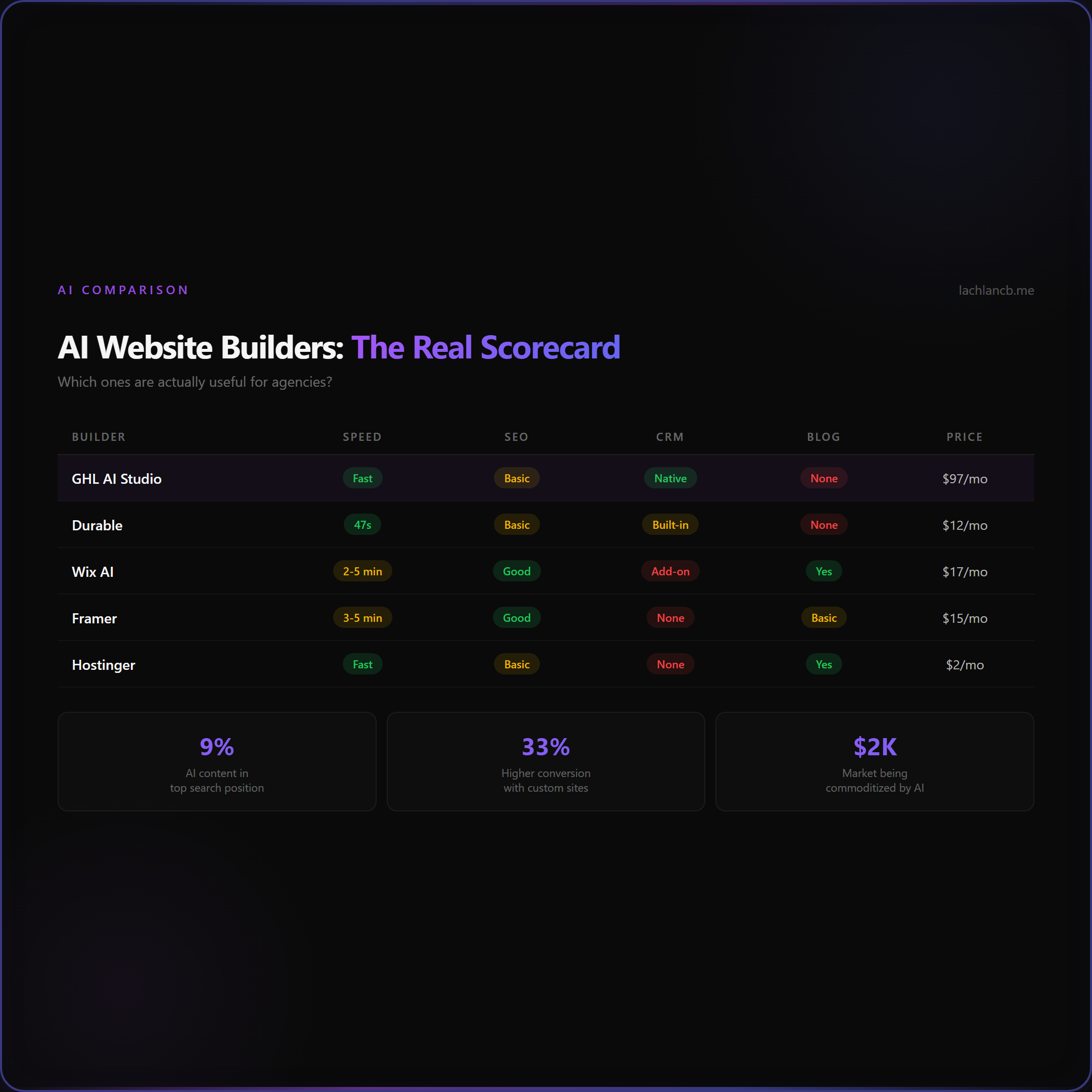
- No blogging system. If SEO matters (and it should), you're stuck.
- Template patterns are recognizable. Build three GHL sites and you'll start seeing the same bones. Your clients might not notice. Their competitors' agencies will.
- SEO is surface-level. Auto-generated meta tags are better than nothing, but there's no schema markup, no internal linking strategy, no topical authority. AI-generated content hits the top search position only about 9% of the time compared to 80% for human-written pages.
- E-commerce is weak. If someone needs a shop, look elsewhere.
The honest verdict: these are prototypes, not products. And that's fine — if you treat them that way.
The Strategy That Actually Makes This Work
Here's what I've landed on after a week of testing.
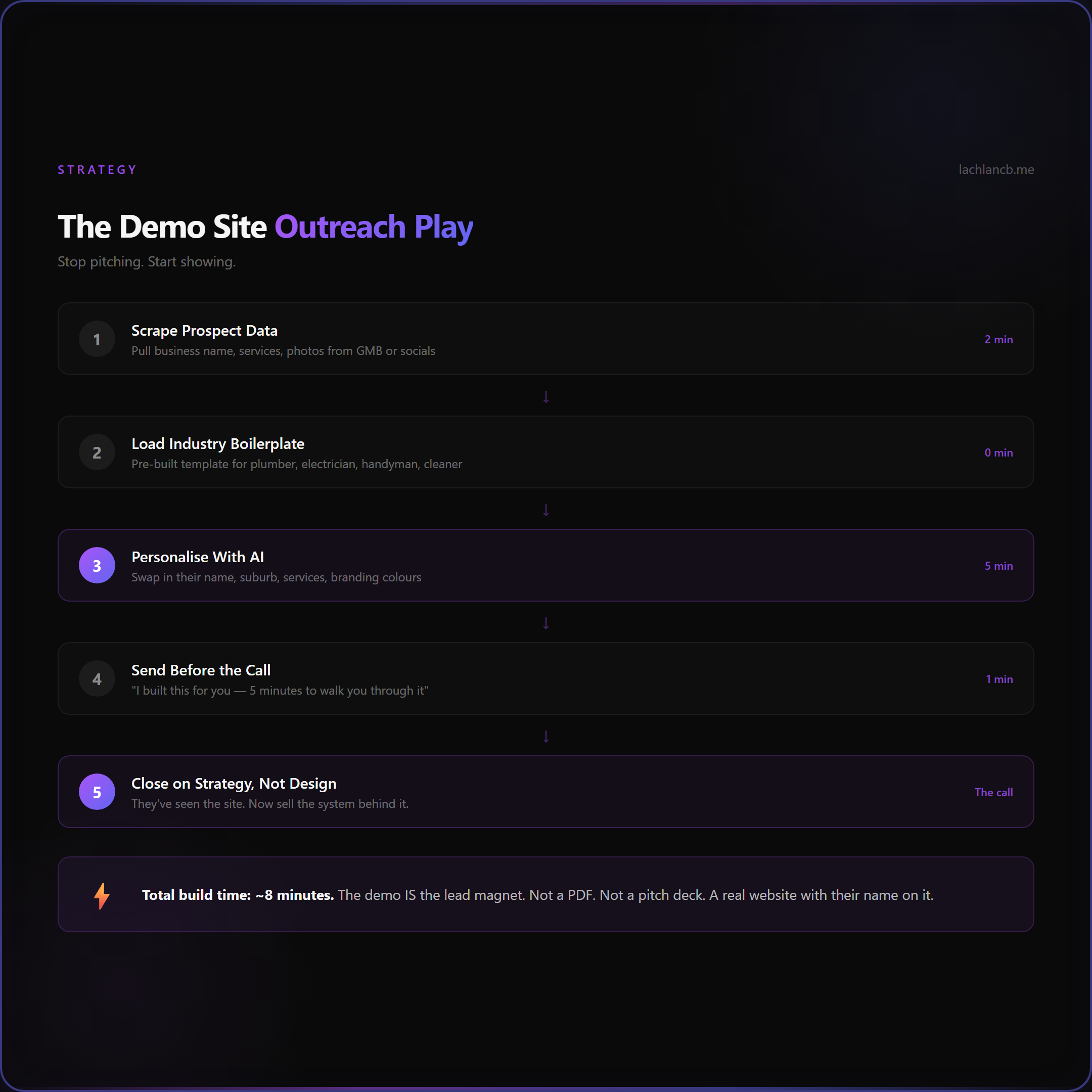
Don't build from scratch every time. Build a boilerplate — one solid template per industry (plumber, electrician, handyman, cleaner). Then for each prospect, swap in their business name, their suburb, their services, and ideally their real photos pulled from Google Business Profile or their socials.
The demo site IS the lead magnet. Not a PDF. Not a case study. Not a Loom video. A real website with their name on it.
Send it before the call: "Hey, I built this for you — takes 5 minutes to walk you through what's possible."
This works because it kills the biggest objection in cold outreach: "Why should I trust you?" You've already done the work. You've already shown what you can deliver. The skepticism drops, and now the conversation is about details, not credibility.
Where This Is All Going
AI website builders are eating the sub-$2,000 website market alive. Durable can generate a full site in 47 seconds. Wix, Hostinger, Framer — they all have AI builders now. The "just need a web presence" client is gone. That work has been commoditized.
But here's what most people miss: custom-designed sites still convert 33% higher than AI-generated templates. The gap isn't in having a website — everyone can have that now. The gap is in what the website does.
Does it rank? Does it generate leads? Does it integrate with a CRM? Does it have a booking flow that actually works? Does it build topical authority over time?
That's where human strategy still wins. AI gives you speed. Humans give you intent.
I wrote about this shift when Claude Design first dropped — the tools keep getting better, but the value is moving upstream. Away from execution, toward strategy. Away from "can you build me a site" toward "can you build me a system that generates leads while I sleep."
The Bottom Line
AI Studio isn't going to replace your web dev stack. Not yet. But it's already replaced the pitch deck.
If you're in the agency game and you're still sending proposals before prospects have seen anything tangible — you're working too hard. Build the demo. Send it cold. Let the site do the selling.
The tools will keep getting better. The latency will get fixed. The templates will get smarter. And eventually, the SEO gap will close too.
The question isn't whether AI can build a website. It already can. The question is whether you can build the strategy around it that turns a pretty page into a business that actually works.
That's still a human job. For now.