Abstract
Everything else I do gets optimised, systemised or monetised. This is the one area where that's explicitly banned. The point of it isn't output. It's what it recalibrates.
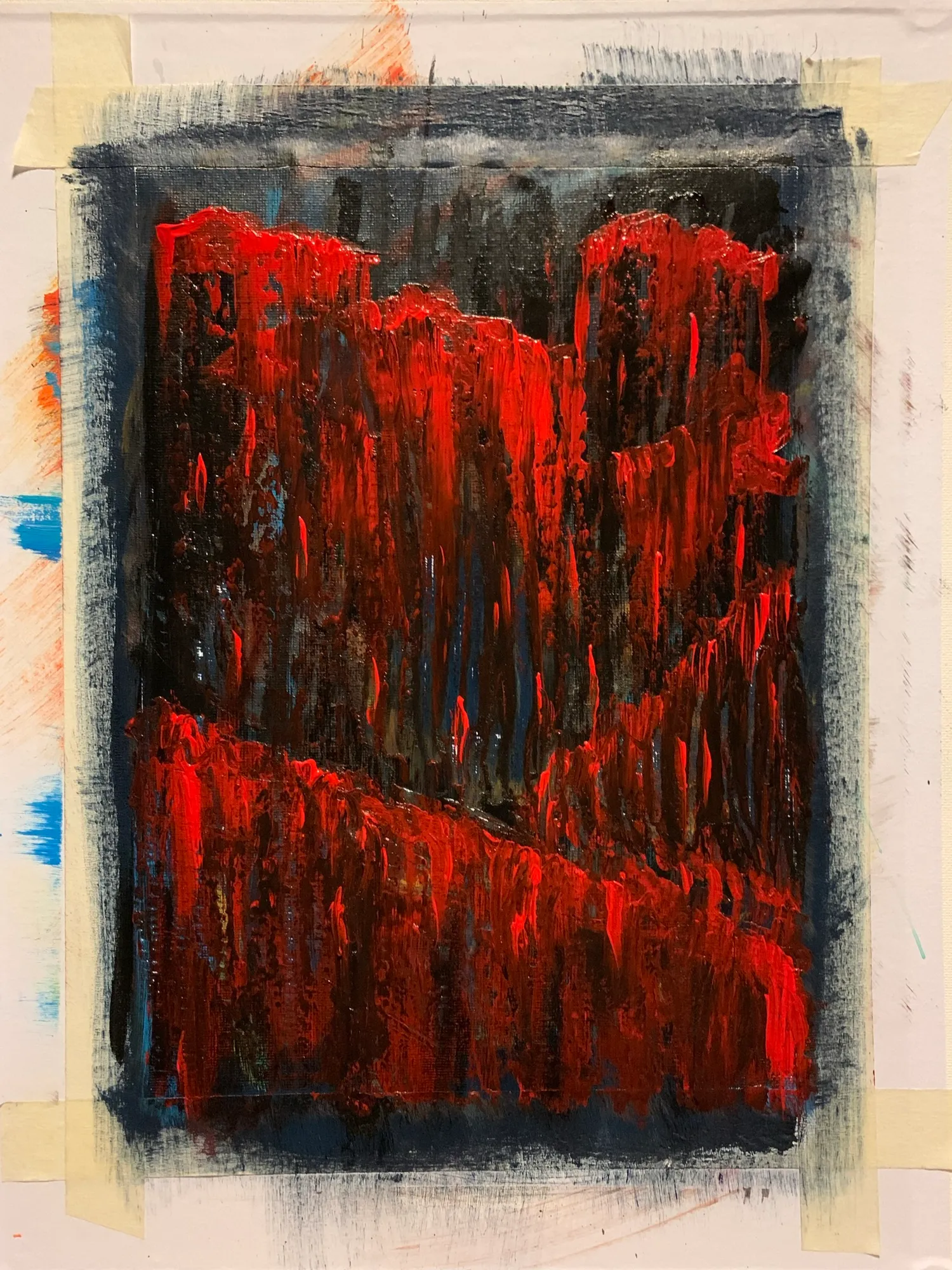
Abstract is the creative area. It is the only one on the map with no return attached. AI image and motion work, painting, dioramas, analog game design and scent blending. The rule is to make things in order to stay calibrated, and to let that be the whole point.
The principle
Create to calibrate. Not to perform. Not to profit.
Why do this if I'm not monetising it?
Because I'm an operator, and an operator's default is to turn everything into a pipeline. Creative work that isn't productive feels like wasted motion, so it gets skipped. The reframe: not all creativity is for ROI. Some is for cognitive elasticity. It refreshes attention without overstimulation, widens what connects to what, and gives the nervous system somewhere unstructured to go. The guardrail is a No Monetisation Zone: one to two hours a week for exploration without extraction.
Why create at all when AI is faster?
AI outpaces me on execution and always will. It can't feel whether something landed, hold an identity, or choose what's worth being obsessed with. It can't work in the irrational edge-states where the interesting things happen. A model averages toward consensus by design. So I'm not competing with it. I'm using it as an amplifier for taste.
I'm planning for 135.
- Health becomes compoundingNot maintenance against decline. An asset with a very long runway. Which is the actual reason that area is the biggest one here.
- Reversibility beats optimalityOn a long enough horizon, the option to change your mind is worth more than being right early.
- Boredom becomes a riskA long life is a lot of time to stay interested. That's a real design problem, and part of why this area exists at all.
The actuarial tables everyone uses to plan a life were built on the medicine of the past century. I don't think they apply to me. The argument isn't that a breakthrough is coming. It's arithmetic. If medicine starts adding more than a year of life expectancy per year that passes, the horizon stops being a fixed point. It starts moving away from you. Whether that threshold gets crossed in my lifetime is genuinely uncertain. Whether people currently in their twenties and thirties are the first cohort where it's a live question is much less so.
So I use 135 as a working number. Not a prediction. A planning assumption, in the same way you'd size infrastructure for a load you're not certain will arrive. It changes almost nothing about what I do this week and almost everything about how I weight what I do this decade.
There's a second, stranger half to it that I hold much more loosely. If biology holds long enough for the substrate question to become engineering rather than philosophy, then continuing may stop being purely biological. The system could run on something that isn't tissue. I find the engineering plausible on a long enough horizon and the philosophy completely unresolved. A sufficiently good copy of a pattern is either continuity or an extremely convincing replacement. Nobody has a way to tell those apart from the outside. That's precisely the kind of question I want somewhere in my life that isn't attached to an outcome.
Which is why this sits here rather than under Health. Health has protocols. Things I do, on a cadence, that I can be held to. This has none. It's a frame, and the honest test of a frame is whether it changes any decision. This one does. It makes health compounding rather than maintenance, makes optimising any five-year horizon look faintly ridiculous, and makes reversibility worth more than optimality. Boredom becomes a genuine long-term risk rather than a mood.
The reason I'm comfortable being wrong about it is that the bet is asymmetric. If I'm wrong, I've spent my thirties sleeping properly, training, and staying curious. That's what I'd want to have done anyway. If I'm right but planned as though I weren't, those small decisions all sit on a horizon that was an order of magnitude too short. The futurism isn't the argument. The payoff structure is.
I could be entirely wrong about the timeline. I'd rather state the belief plainly than hedge it into something that costs nothing to be wrong about.
Two years ago it couldn't draw a hand.
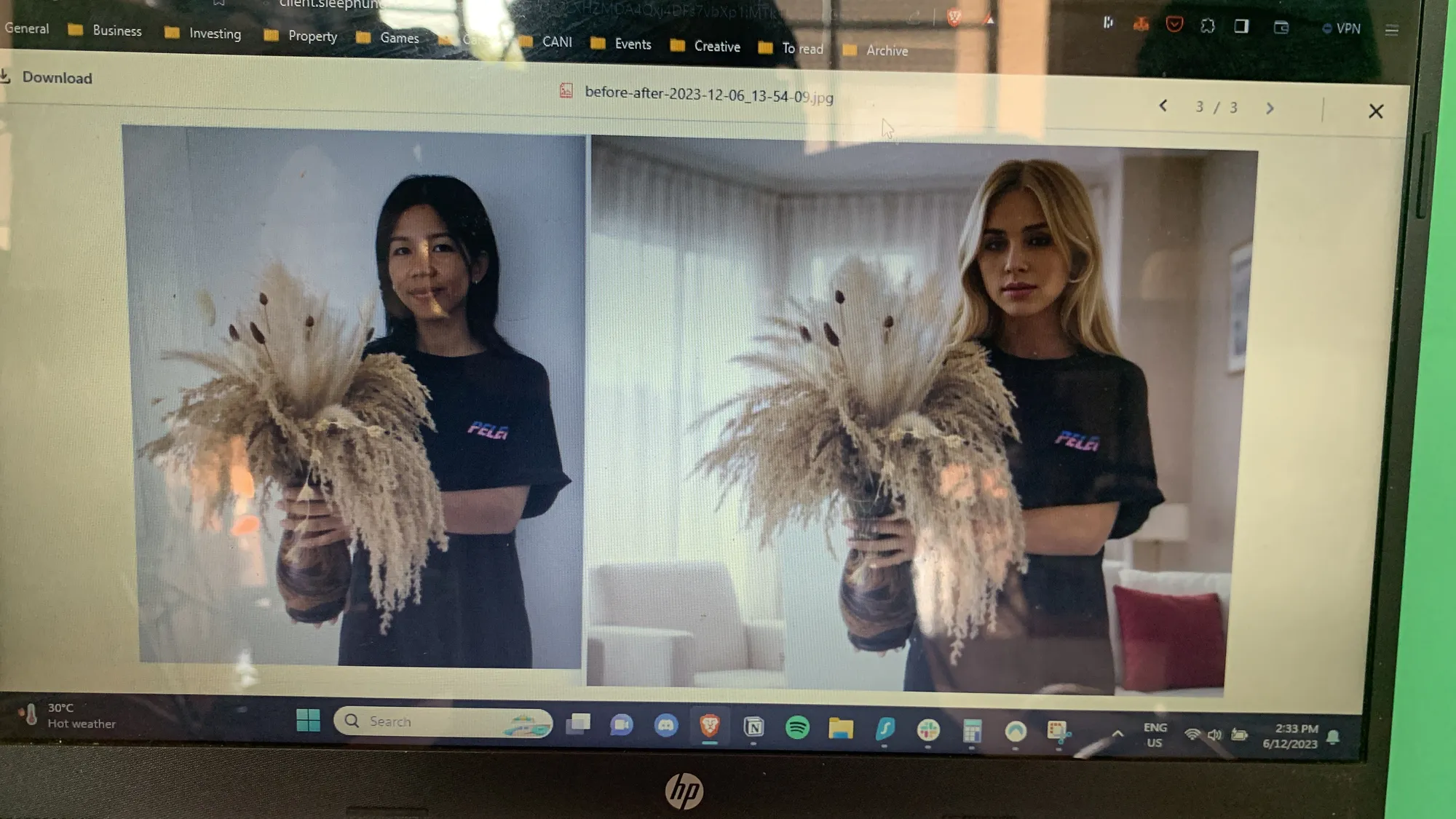
The image here is the first thing I ever generated. Looking at it now the tells are everywhere, and none of them are subtle. The fingers are wrong. That was the famous failure, the thing every model got catastrophically incorrect for years. Small features fall apart under any scrutiny at all. And the whole surface has that glossy over-rendered sheen that made an AI image identifiable from across a room.
That was a very short time ago. The same prompt today produces something essentially undetectable. The distance between those two points is the fastest capability jump I've watched happen in anything.
What that means past the novelty is that images have permanently stopped functioning as evidence. For most of the last century a photograph was a reasonable proxy for something having happened. That is over, and it ended in about two years. The upside is genuinely enormous. Anyone can now make what they can picture, which is the half I actually care about. The downside arrives at exactly the same speed. It lands on courts, journalism, elections, and every person who has ever had their face online.
I keep this one because it dates the shift. It's a bad image, and being able to point at how bad it was is the entire reason it's worth keeping.
And now it moves
The still images above date one shift. This dates the next one. Holding a composition, an art style and a colour palette steady while the frame actually moves was the hard part of generative video, and the gap between it being impossible and being routine was measured in months rather than years.
Which is the same argument as the fingers, one medium along. Whatever you currently believe is out of reach, check again shortly.
Falling a year behind now is not a year of catching up.
The two sections above are about images. This one isn't. Put the still and the motion clip side by side. The honest read isn't that AI got better at pictures. It's that the rate of change itself changed. The thing accelerating is the acceleration.
We've lost the ability to measure it in any way that helps. Every previous technology gave you a runway: the web took a decade to reorganise business, mobile took most of another. You could be late and still arrive. The current curve doesn't offer that, because the tools are now improving the tools. What you're behind isn't a product. It's a compounding process.
Which changes what falling behind costs. A year late used to mean a year of catching up. Now it means arriving to find the ground has moved again. The people who didn't stop have compounded a year of leverage you never built. The gap doesn't stay a year wide. It widens while you close it.
The part I find genuinely uncomfortable is who this lands on. Not people like me. I'm paid to keep up and I find it interesting. It lands on everyone who was already finding technology hard. People who spent a decade getting confident with one interface. Older generations who adapted once and reasonably assumed that was the adaptation. They're being asked to re-learn on a cycle that's now shorter than the time it takes to get comfortable.
That's the trickle-down nobody talks about. Not job displacement in the abstract. A permanent state of being slightly behind, for people who did nothing wrong except learn something well and expect it to stay true. I don't have a solution to that. I do think it's the actual story. Most of the conversation is aimed one or two layers above where the damage falls.
The same instinct, in code
Abstract work doesn't have to be paint. These are interactive pieces — moiré interference, a hyperspace field, an accretion disc, a wormhole made of nothing but grid lines — built the same way the canvases were: no plan, no brief, and stopped at the point where they were still interesting rather than finished. Each one runs live below.
- AI designGenerative imagery to externalise a mood or a world before it exists in words.
- Painting — acrylic & oilAbstract work. No correct answer, which is precisely the difficulty.
- Dioramas & micro-buildingSmall physical scenes. Spatial, tactile, finishable.
- Analog game designCards, branching paths, rituals. Storytelling and system design in the same object.
- Scent blendingMixing oils into emotional-state kits. Sensory memory is an underrated medium.
- Music & soundAmbient loops and sketches. Portable, rhythmic, still deeply human.
- Micro essays100–300 words to compress a feeling into something with edges.
- SpeakingThe one creative mode with a live audience and no undo.
Not finished work — capsules. Small, self-contained, deliberately raw. The point is to encode a shift or a tone worth keeping, not to produce something publishable.
- Zine fragmentOne page holding a micro-world or mood.
- Loop setTwo to four audio loops: textures, sketches, field recordings.
- Icon sheetCustom symbols and glyphs. Sometimes becomes a visual language.
- AI visual batchThree to six thematically connected images. Coherence, not quantity.
- Sketch spreadA loose page or two. Form over polish: tension, texture, symbol.
- Voice setThree short memos: a mantra, a texture, a verbal sketch.
- Every 6–9 daysRun one ritual from a mode I haven't touched recently.
- MonthlyRelease or archive a capsule.
- QuarterlyPull signal from noise. Find the two or three threads worth expanding.
The judge
I painted seriously for a while and then stopped. For years I assumed it stopped because it wasn't going anywhere. It didn't. It stopped because of the judge. An internal scoring reflex that sits between making something and feeling like you made it. Abstract work has no correct answer, so the judge imports a standard from somewhere else and blocks the reward. The thing worth learning there isn't painting. It's making something without scoring it, and I have almost no reps at that. What's strange is that this file already said so, months before I worked it out.