Projects
Ventures with an actual outcome. One lost money, one was killed on purpose, one has started to sell.
Projects are the ventures that reached an actual outcome. There are three. A physical product brand that lost money. A faceless video channel killed on purpose. A book-systems product that has made its first sale.
Most project pages are a list of wins with the failures quietly removed. That version is useless to read and dishonest to write. These are the things I actually took far enough to find out whether they worked. Two of them didn't. The interesting part was never the idea. It was the specific number or constraint that decided the outcome. In every case I could have found that number earlier than I did.
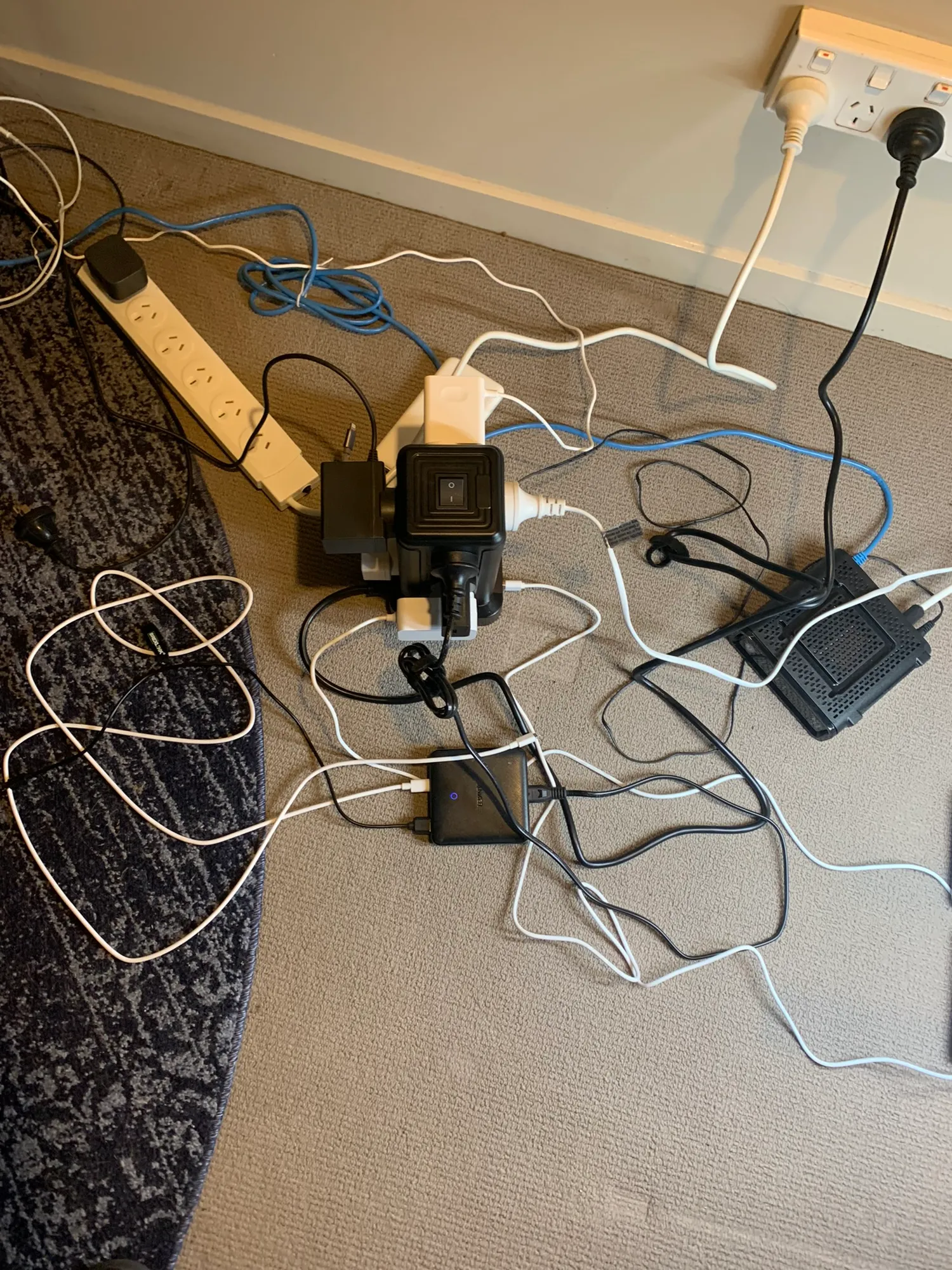
A physical product brand
My first e-commerce brand. A wireless-charging lamp, custom branding, around 300 units bought before anyone had proved they wanted it.
- Ran
- 2023
- Product
- Wireless-charging lamp, own brand
- Stock
- ~300 units, paid up front
- Multiplier
- ~3× cost to price
- Outcome
- Killed, unprofitable
In 2023 I built a product brand properly. Custom branding, two colourways, roughly three hundred units sourced direct from a Chinese manufacturer and paid for up front. It sold. It also lost money on almost every unit, and it took five or six months to clear the stock I had already paid for.
The number that killed it was the margin multiplier. Landed cost to sale price ran at about three times. That sounds healthy until you start subtracting. Advertising takes a cut. Platform fees take a cut. Returns take a cut, and the return rate ran near ten percent because the product had electrical defects I could not see from photographs. At three times, there is no room for ads, fees, returns and one mistake at the same time.
Everything else that went wrong was a symptom of that one number. I have seen the same pattern in other people's stores since. They describe a marketing problem, or a supplier problem, or a platform problem. Underneath it is almost always a multiplier that was never high enough to survive the real cost of selling.
Total loss came to around seven thousand dollars including ad spend. I count that as tuition rather than waste. But only because I can now state the rule in one sentence, which I could not do before.
Cost to price has to be five times or better. Below that, the first mistake is the last one.

A faceless video channel
A YouTube channel built without ever showing my face. Killed deliberately in July 2026, not paused.
- Format
- Faceless, scripted
- Status
- Killed July 2026
- Rule 1
- Never faceless again
- Rule 2
- Minimise cost per datapoint
The idea was a channel that did not depend on me being in front of a camera. Scripted, produced, and entirely anonymous. On paper that scales. In practice it removed the only thing that was actually working in my favour.
Faceless content competes purely on production and volume. I was never going to win on either against people doing it full time with teams. What I do have is specific experience and a willingness to say what I think. None of that survives being stripped out of the frame. I was playing away from my strengths and calling it a strategy.
The second problem was cost per datapoint. Every experiment on that channel was slow and expensive to run. Weeks of production to learn one thing about what an audience responded to. Compare that to writing, where the same question gets answered in an afternoon. When learning is expensive, you learn less, and you learn it later.
I killed it rather than parking it. Parking a project keeps it on the list and keeps it taking up attention. Calling it dead frees both. The two rules it produced still bind what I build now, which is more than most successful projects leave behind.
Kill it or commit to it. A parked project still charges rent on your attention.
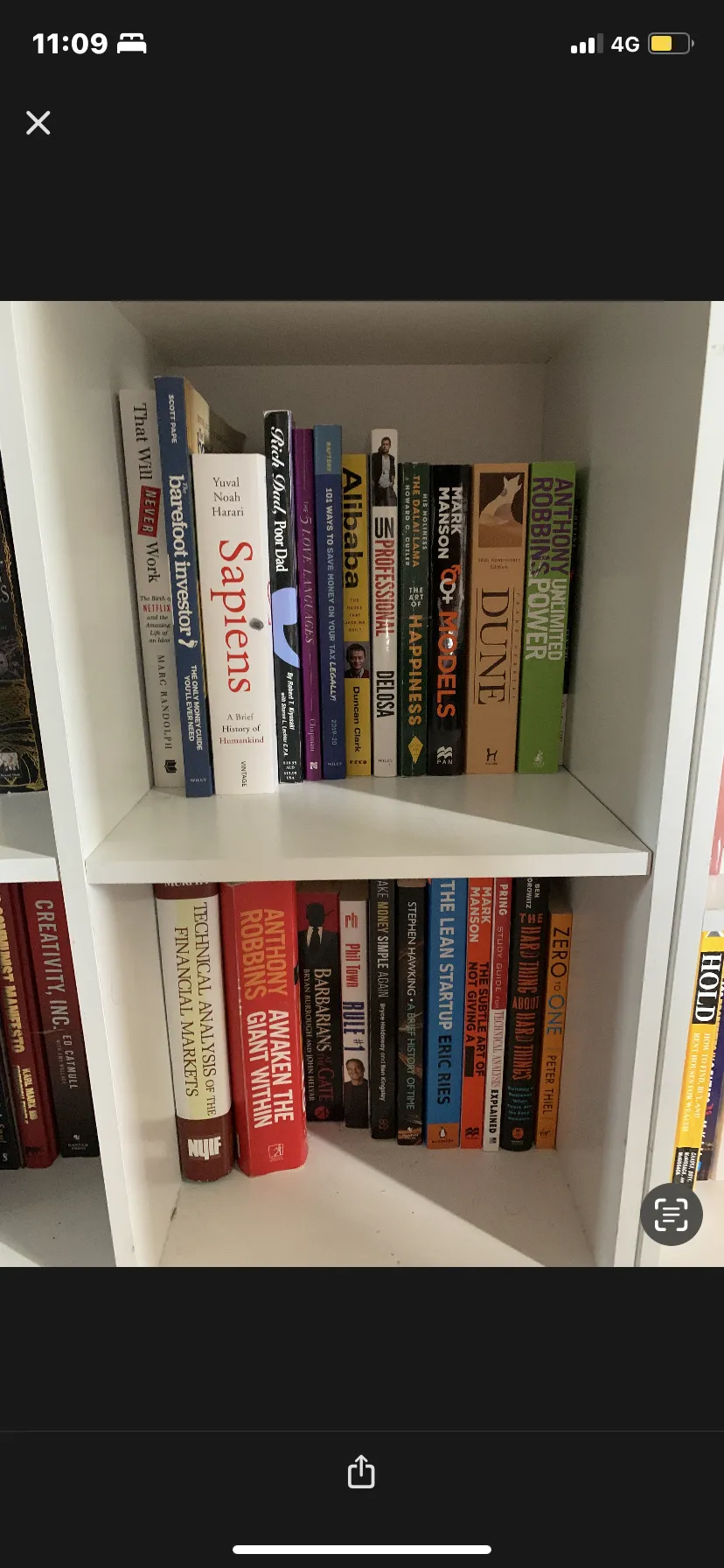
A book-systems product
A template that turns a book into something you apply rather than something you finish. First paid sale in July 2026.
- Format
- Template, one book per unit
- First sale
- July 2026, organic
- Evidence
- n=1, not product-market fit
- Constraint
- Distribution, never production
The premise is narrow on purpose. Any chatbot can summarise a book in seconds, so a summary is worth nothing. What nothing on the market does well is turn a book into a system you actually run. The insights, plus workbooks, prompts and a tracker that make you do the thing the book describes.
The first version covers one book. Someone bought it in July, organically, through a marketplace listing, for a little under thirteen dollars net. I want to be precise about what that means, because it is easy to inflate. It means the product can be bought. It does not mean there is a market. One sale is a signal that the mechanism works end to end, and nothing more than that.
The temptation after a first sale is to mass-produce. Twenty more books, immediately. That would be building on a sample size of one, and the failure mode is obvious in hindsight and invisible at the time.
The real constraint has never been production. I can build these faster than I can sell them, which is exactly the trap. Every project on this page failed or stalled on distribution, and this one will too unless the demand question gets answered before the catalogue grows.
A first sale proves the thing can be bought. It does not prove anyone is waiting for the next one.
What that adds up to
One brand that lost about seven thousand dollars. One channel killed on purpose. One product with a single sale against it. Read as a scoreboard that is a poor record.
Read as a pattern it is more useful. Every one of these was buildable. I sourced the stock, produced the videos, shipped the product. Not one of them failed because I could not make the thing.
They failed on the number I had not checked, the strength I was not using, and the demand I had not tested. Building was never the constraint, which is uncomfortable, because building is the part I enjoy and the part I am good at.
What is live now is the book-systems product, and the honest next step there is not another book. It is finding out whether anyone beyond the first buyer actually wants one.
Figures are from my own records and rounded. Nothing here is advice about starting a business — it is a record of what happened when I did.